Orchestrating Multiple AI Assistants Into a Coherent Business Workflow
Infrastructure for coordinating AI agents must handle state, failures, and handoffs.
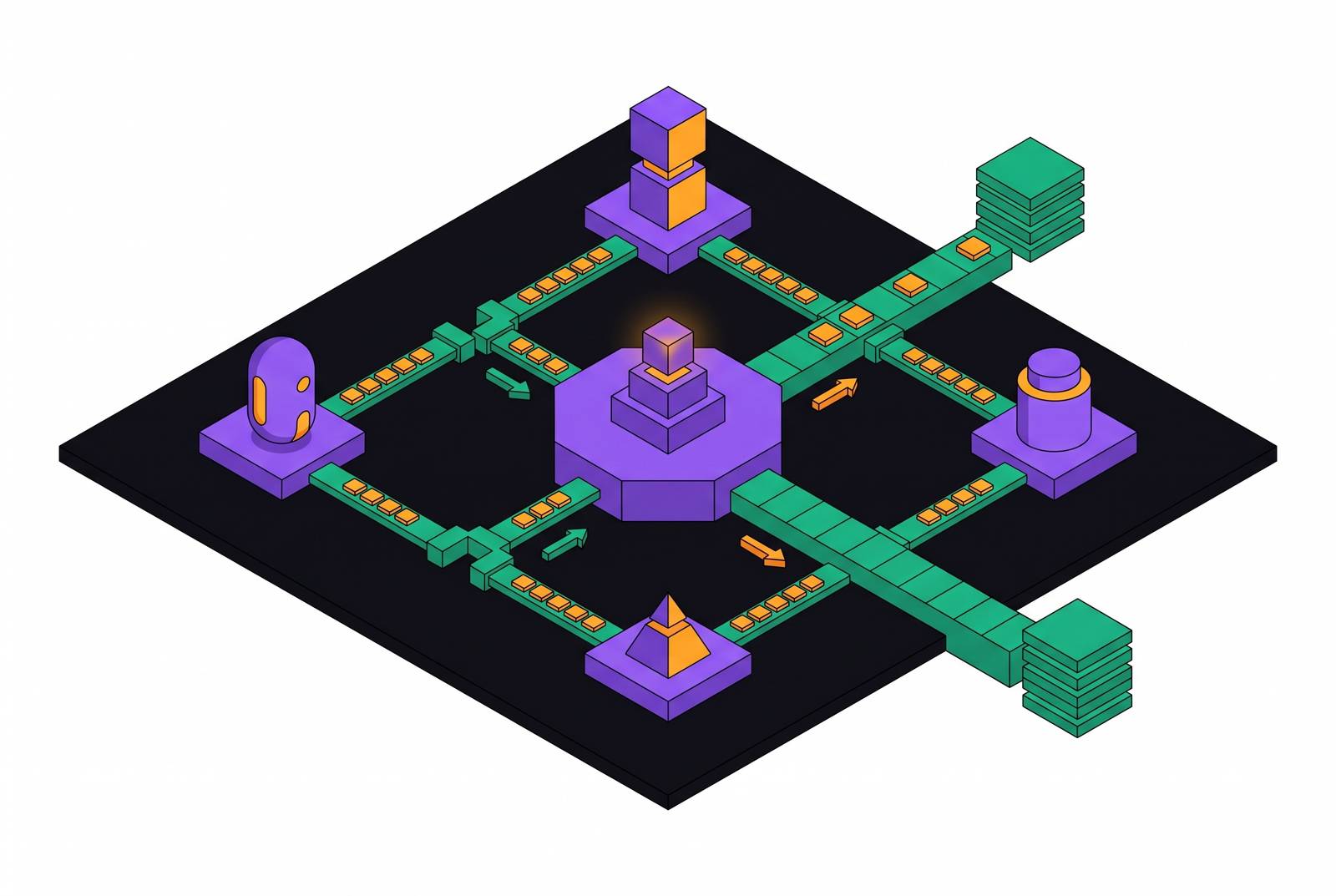
Business AI for multi-step operations needs more than capable assistants. Orchestrating multiple AI assistants into a coherent business workflow requires a runtime that passes context, preserves state, schedules work, and recovers from failures. The useful distinction is between automation tools for known paths, agent frameworks for coordination logic, and infrastructure that governs execution when the path changes.
Why multi-agent workflows fail in production despite working in demos
Consider a workflow that works in a notebook, then silently corrupts state at step four in production. Each agent may still give an answer that sounds right. The failure is between them, where one specialist receives incomplete context or treats a wrong fact from an earlier step as settled. A better prompt does not repair that handoff.
Decomposition solves one problem while creating another. A single agent handling a ten-step operational sequence can lose contextual coherence, hallucinate, or stall, so splitting the work among specialists is a reasonable engineering response. But those specialists now need coordination that the notebook may never have exercised. Execution can outlast a request-response cycle, a failed step must leave recoverable state, and a retry must not rebill completed work.
The choice of tool can deepen the mismatch. Frameworks, cloud platforms, automation tools, and developer agents are often described in similar language, although they solve different problems. Workflow automation assumes that the path is known upfront. Agent orchestration must evaluate tool use, reasoning, and state as the request unfolds. When a business process contains ambiguity, a fixed route alone cannot decide what should happen next.
What the orchestration layer actually does, and why it is a distinct piece of infrastructure
IBM Research’s paper Towards an Agent Operating System - Lessons from Classical and Cloud OS shows how agent infrastructure follows a familiar path through history. Platform software begins with competing frameworks and ad-hoc implementations, develops stable abstractions, and consolidates around a platform that applications can target portably. POSIX played that role for classical operating systems. Kubernetes did so for the cloud, while agentic AI remains in the experimentation phase.
The paper argues that missing abstractions prevent portable applications and reliable composition across platforms. That gives the agent operating system idea a concrete purpose. It is not simply a new label for an agent framework, but a way to define the guarantees that agent execution requires. Existing cloud primitives provide a starting point, yet stochastic, natural-language-mediated work needs its own execution semantics.
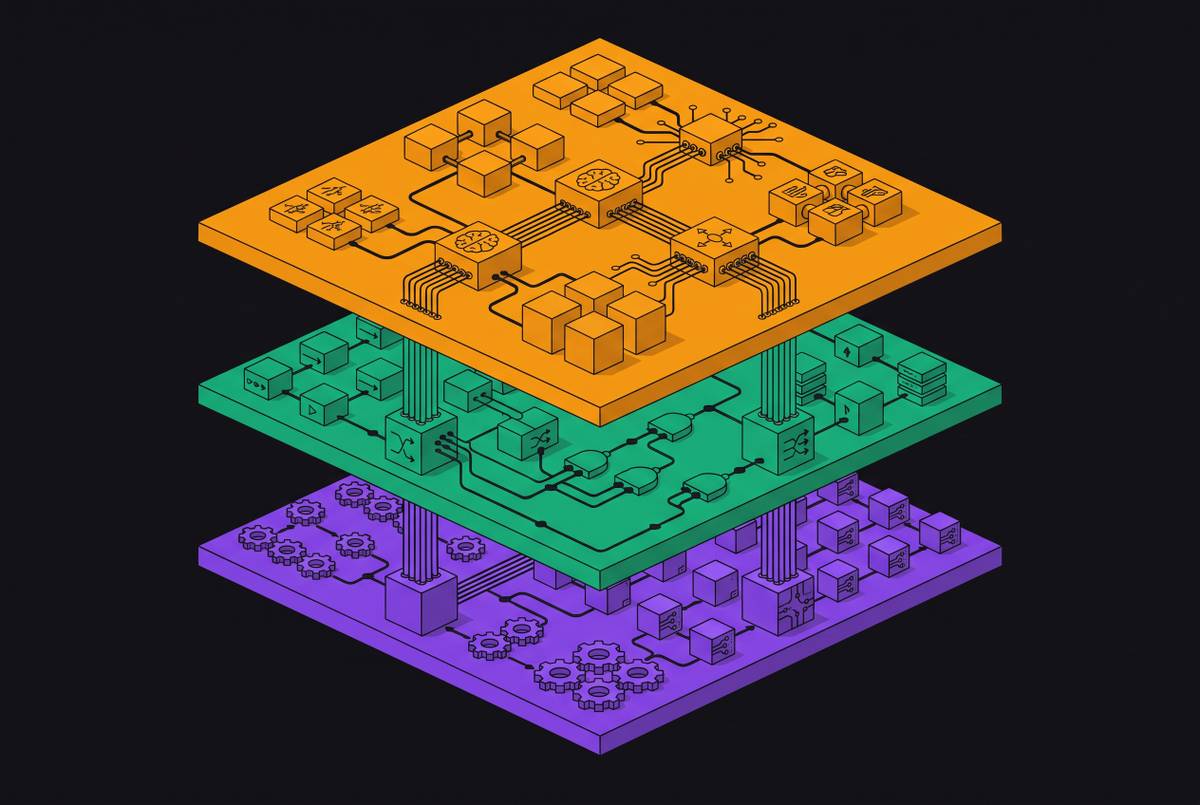
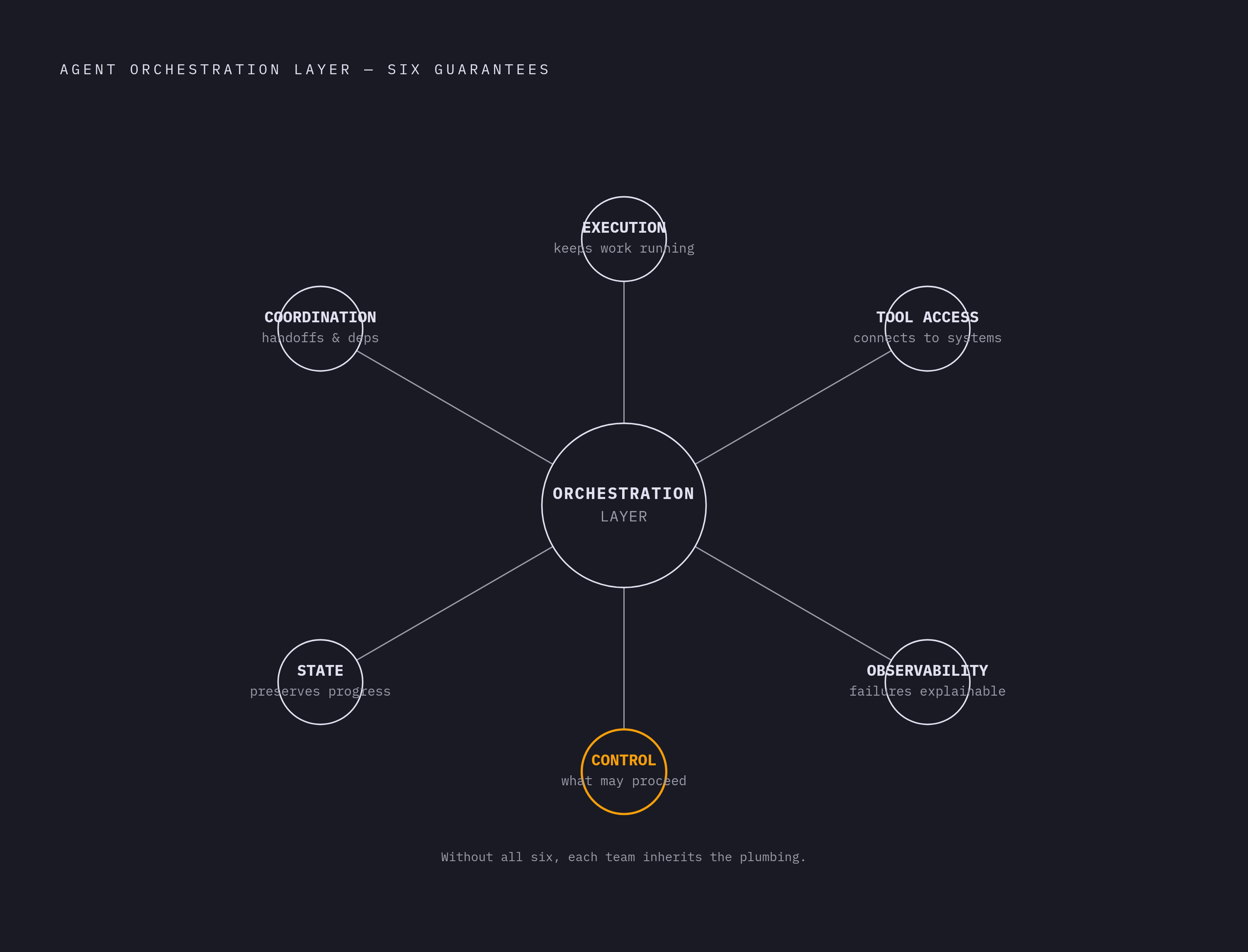
In practice, orchestration has six responsibilities, including execution, coordination, state, tool access, observability, and control. Execution keeps work running after a single request ends, while coordination handles handoffs and dependencies. State preserves progress, and tool access connects agents to the systems where work happens. Observability makes failures explainable, while control determines what actions may proceed. Without these responsibilities, each team inherits the plumbing.
A framework can set out reasoning, handoffs, and recovery paths. The infrastructure must make those choices work within real access rules and budgets, even when things fail. That distinction explains why a convincing framework demo is not evidence of a production-ready system.
The three coordination patterns that production teams actually use
Sequential orchestration passes work through a fixed pipeline. Agent A produces output, agent B consumes it, and agent C finalizes the result. This fits well-defined processes such as KYC checks, document review, and three-step approvals, where predictability outweighs flexibility. Its weakness follows from that strength. An incorrect intermediate result can propagate through the remaining steps, while a request outside the planned route has nowhere useful to go.
Hierarchical orchestration gives that routing decision to a supervisor. The top-level agent reads the goal, selects a specialist, and passes the relevant context. It then assesses the output and decides whether to retry, escalate, or move on. Google ADK implements this through a root orchestrator that delegates to sub-agents, which can themselves coordinate lower-level agents. The structure maps naturally to departmental work.
The supervisor also manages dependencies and stopping conditions. It decomposes the objective into specialist tasks, controls their sequence, and judges when the result is good enough to stop. Those decisions need explicit runtime support. Without that support, when a specialist fails, the wider workflow has no next step it can count on. Narrow tool and data access makes each specialist easier to reason about than a super-agent with too many tools.
Swarm orchestration removes the fixed hierarchy so peers can share state and pass control based on what each can do. It offers flexibility for research and long-horizon tasks, but control becomes harder. Production teams generally limit it to back-office workloads. The architectural choice therefore determines not just how agents collaborate, but how much debugging and recovery work the team inherits.
How MCP and A2A become the connective tissue of a multi-agent system
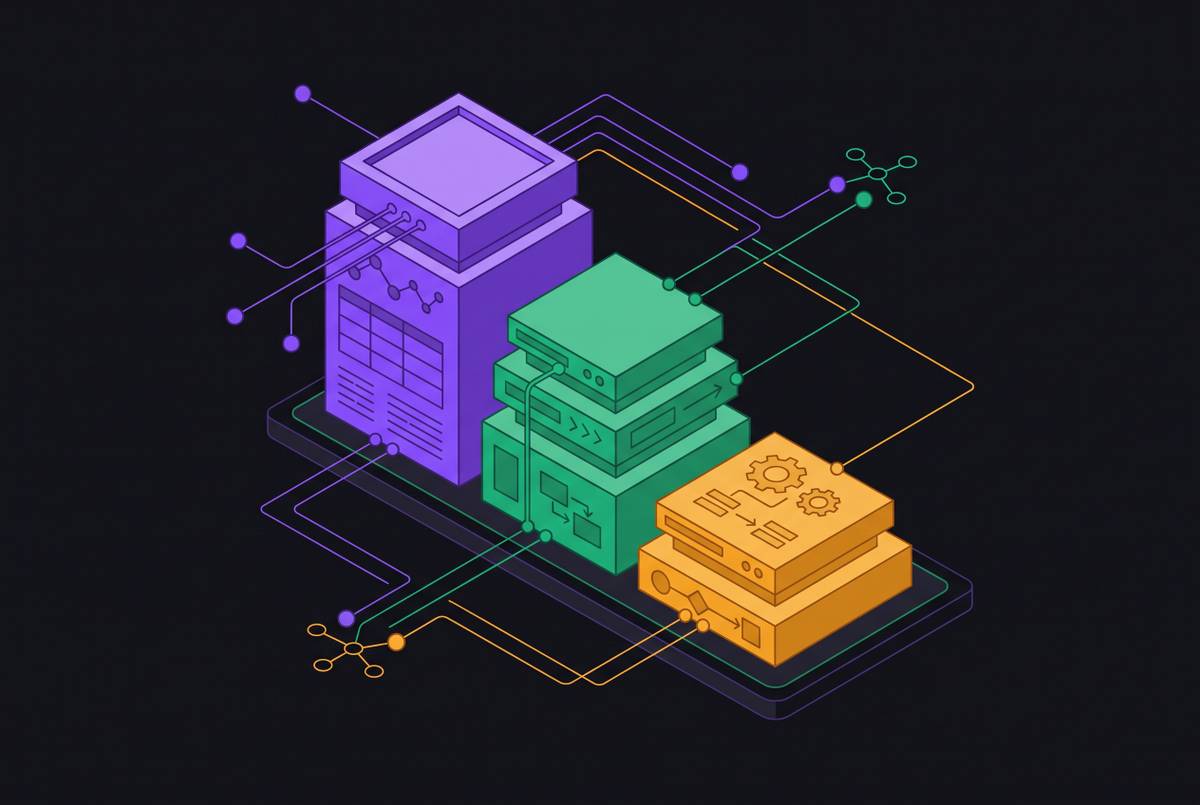
Coordination patterns describe relationships, but they do not provide the connections. Model Context Protocol, or MCP, standardizes how agents discover and invoke tools. A2A standardizes how agents discover, communicate with, and delegate tasks to other agents. MCP connects an agent vertically to its capabilities, while A2A connects it horizontally to peers.
A specialist can therefore be an MCP client internally and an A2A peer externally. It uses one protocol to query a database or ticketing system and the other to receive a task from another agent. MCP can expose CRMs, ERPs, file storage, and custom internal APIs as callable capabilities. This means each integration no longer has to be built by hand. Native support reduces the custom glue that otherwise accumulates maintenance work and security gaps.
For platform evaluation, the practical question is how many relevant enterprise systems have native MCP support and who maintains those integrations. A superficial API connector is not the same thing. The protocol also does not settle every security decision, so governance must sit above the connections.
A2A allows implementers to choose security schemes including OAuth 2.0, mTLS, API keys, and OpenID Connect across transport and application layers. MCP access needs tool-scope restrictions and human checkpoints where required. Infrastructure adds network isolation and audit integration. These layers govern access and action, but they do not establish whether the context passed between agents is correct or durable.
State persistence and shared memory as the runtime's most critical responsibility
A wrong fact written into shared state at step two can corrupt every later step. That is a memory failure. Each specialist may reason sensibly from the context it receives, making the original mistake difficult to locate. More capable models alone do not resolve it.
The runtime needs a memory architecture designed with this risk in mind. Core memory stays in the LLM’s context window, much like RAM, while archival memory provides long-term storage that the agent can query on demand. The distinction keeps active context separate from retained knowledge. It lets long-running agents manage what remains immediately available, what moves into persistent storage, and what should be recalled later. Graph-native memory layers can help when agents need to connect entities, share knowledge, or preserve long-term user context.
Durability answers a different question from memory organization. What happens if a five-step workflow loses its session at step four? It should resume from that point, preserving completed work and avoiding repeat billing. LangGraph illustrates the pattern by saving a snapshot of graph state at every step, organized by thread. Those checkpoints support fault-tolerant resume, conversation memory, time-travel debugging, and pauses for human review.
Checkpointing preserves the execution state needed to inspect and recover the workflow. Persistence is therefore a minimum requirement for work that must continue across failed sessions and restarts.
Failure recovery and human-in-the-loop controls that keep orchestrated workflows safe
Preserved state gives recovery somewhere to begin. The runtime still needs defined behavior when a specialist fails, times out, or returns malformed output. Some steps can retry automatically, while others need a fallback or a human checkpoint. Those choices must exist before deployment. Leaving them to improvised agent reasoning makes the recovery path as uncertain as the failure.
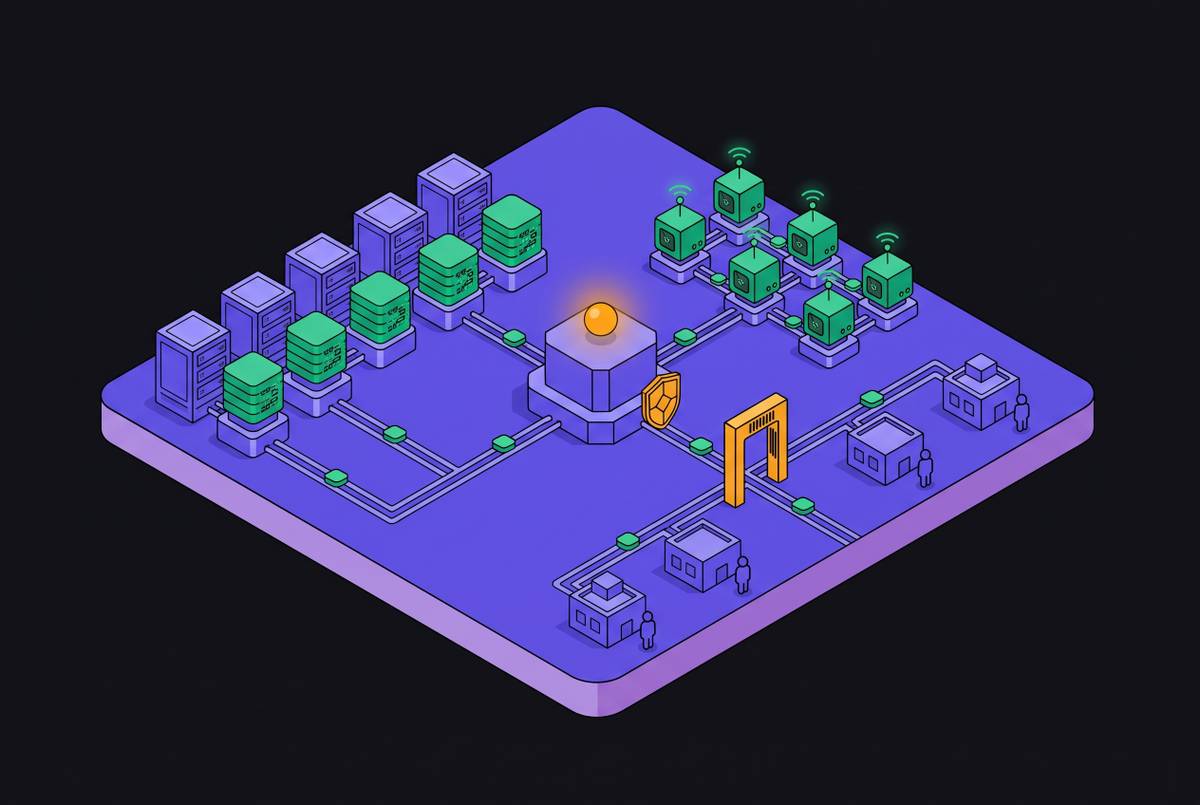
Governance needs a firmer boundary than a prompt. Policy enforcement should be deterministic and applied by infrastructure, rather than expressed only as instructions that a model may fail to follow. In a coding workflow, human checkpoints cover production deployment, destructive migrations, secret access, and high-risk infrastructure changes. In data analysis, they cover changes to metric definitions, destructive database operations, and access to sensitive data. The EU AI Act’s classification depends on function and use case.
Agent identity deserves its own architectural decision. Agents should have distinct credentials scoped to their work, so their actions remain separable in an audit log. That separation supports the immutable audit trail regulated environments require. Cost needs controls that are just as firm, with real-time budget tracking, alerts that teams can configure, and a master kill switch that can stop agent activity at once.
When an action goes wrong, who acted, with what context, and why? Observability must make those questions answerable across the workflow. Tracing links what agents do, while evaluation harnesses and conversation replay help teams look into what went wrong. Without them, shared state can preserve a failure that the team still cannot explain.
A production incident investigation as a worked example of the full pattern
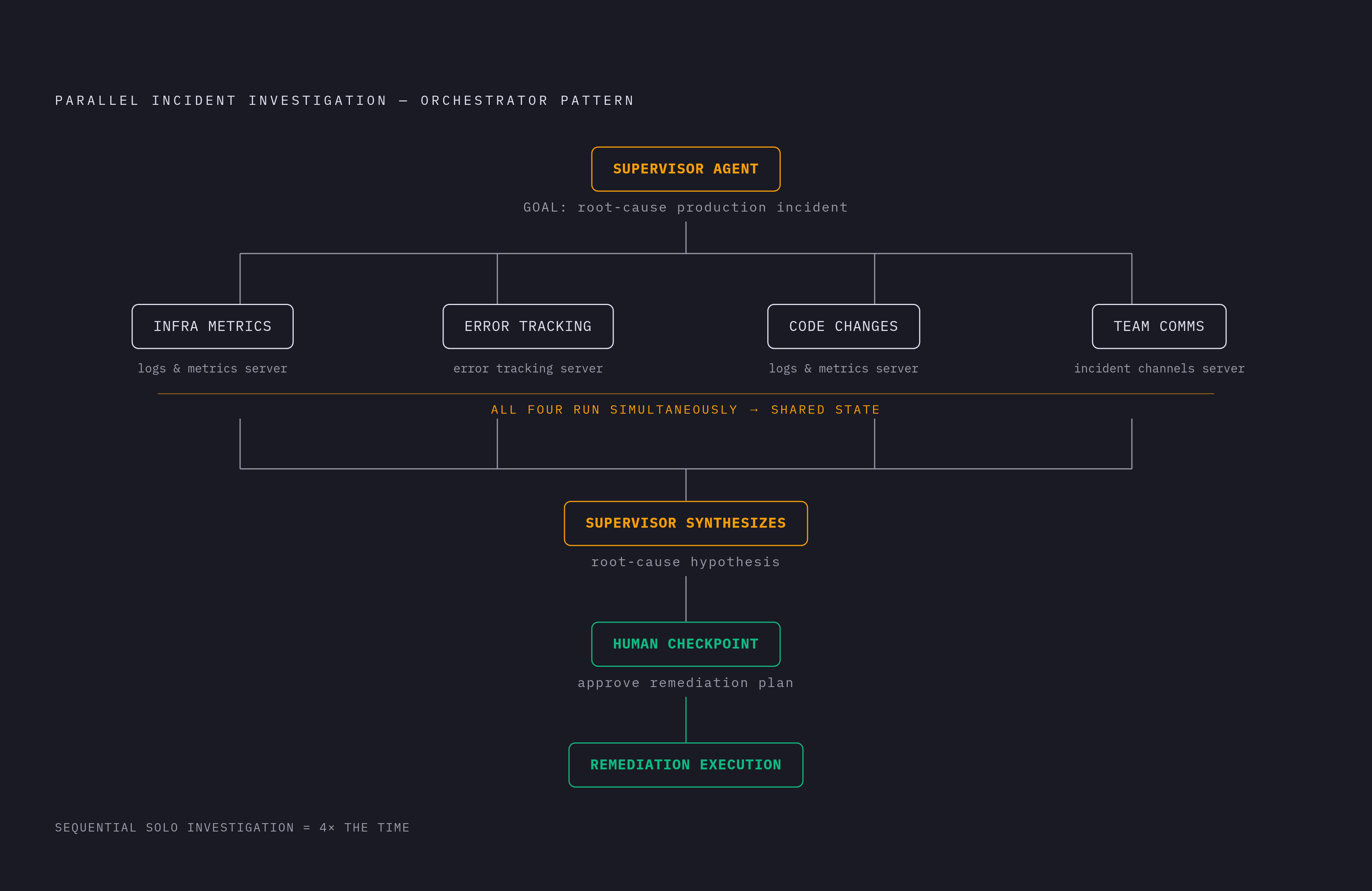
An incident investigation begins with a high-level goal and a route still to be determined. In the practitioner pattern described here, three MCP servers provide access to logs and metrics, incident channels, and error tracking. The orchestrator breaks the investigation into four areas, namely infrastructure metrics, error tracking, recent code changes, and team communications. It dispatches four specialists with clear mandates and access limited to relevant tools. The supervisor is still responsible for the investigation as a whole.
The specialists can work in parallel without each knowing what the others are doing. MCP provides standardized tool access, while shared state preserves partial findings for consolidation. The supervisor uses those findings to form a root-cause hypothesis that fits them together. Tracing makes the path through the investigation inspectable. Human checkpoints then govern remediation before execution.
The time benefit follows from the coordination model. Parallel investigation reduces wall-clock time compared with a sequential solo investigation, while the supervisor handles synthesis. Datadog’s Bits Agent Builder supports the same broad loop at the platform level. An investigation agent can analyze logs and traces, then trigger a remediation agent when a proposed fix matches a known pattern. Those patterns include restarting a service, rolling back a deployment, or scaling a resource.
OpenSRE is an open-source tool for incident investigation and root cause analysis. Originally built on LangGraph and now using the Claude Agent SDK, it integrates with systems including Grafana, Datadog, CloudWatch, Sentry, Kubernetes, AWS, GitHub, Slack, and PagerDuty. Its Slack workflow opens a thread in the on-call channel when an incident alert triggers, bringing investigation into an existing work surface.
Begin adoption where failure is visible and contained. Log analysis and incident investigation are places to start. Code review automation can follow once the team trusts the quality of the agent’s output, rather than expanding authority before the investigation workflow is dependable.
What should a business demand from infrastructure that no framework supplies on its own?
A framework comparison can explain coordination logic without answering who governs an agent, what it may access, or what it costs to run. Those are runtime questions. Scheduling belongs there too, because a system that only answers requests cannot perform work that must begin later. Persistent state and long-running execution must be native capabilities.
A production platform therefore needs evidence beyond task completion. Its track record should be supported by an immutable audit trail for agent decisions and actions. Governance should live in the infrastructure, and MCP integration should reach the enterprise systems the workflow actually uses. Real-time cost controls, budget alerts, and a kill switch must constrain execution.
Model portability also helps keep teams from getting locked in. Pricing, capabilities, and policy positions change, so the infrastructure should allow teams to swap or combine models. For buyers, the test is architectural. Buyers learn more by asking where governance lives than by taking an existing assistant, chatbot, or automation tool at its new agentic label.
An agent runtime built for the job puts scheduling, memory management, tool orchestration, and recovery behind a clean interface. A developer-first implementation can be curl-installable without making every team own the operational complexity beneath it. Easy installation, however, is not a substitute for those guarantees.
As agent abstractions consolidate, infrastructure must be able to evolve without forcing applications to absorb every change themselves. Developers should demand portable execution, durable context, enforced controls, and recoverable workflows from whatever runtime they choose.