AI Agent Audit Trails for GDPR, HIPAA, and SOC 2 Compliance
Regulators designed frameworks for humans; agents now need purpose-built audit trails.
Most teams still treat compliance like paperwork: fill out the right forms, log the right access, and an auditor eventually signs off. That model breaks down completely once an agent is the one taking the actions, because every major framework was built on an assumption that no longer holds. GDPR assumes a contracted data processor. HIPAA assumes an identifiable workforce member. SOC 2 ties its access controls to specific human users, and even the EU AI Act leans on the idea of human supervision sitting somewhere in the loop. None of that maps cleanly onto a system that decides and acts on its own.
What actually makes an agent different, structurally, from the humans these frameworks were written for? Five properties, taken together, break the old model. Agents act without per-action human approval. They carry non-human identities that most identity and access management infrastructure was never built to track. They cross system and regulatory boundaries inside a single workflow, sometimes touching three or four systems in the time it takes a human to open one. Their behavior shifts over time in ways nobody explicitly programmed. And they run at machine speed, moving through large volumes of sensitive data continuously rather than in the occasional, reviewable burst a human worker would produce.
A quarterly audit cycle was built for a world where humans generate a reviewable trickle of actions. An agent can touch thousands of records and set off workflows across multiple systems within seconds, and the review cycle designed to catch mistakes simply cannot operate on that timescale. Compliance teams are not falling behind through negligence; the review mechanism and the thing it is reviewing no longer move at compatible speeds.
Minirange's 2026 analysis makes the stakes explicit. The governance gap here is a structural compliance risk, not an item sitting on someone's roadmap. Organizations that deploy agents quickly while leaving governance where it was are not accumulating future risk they can get to later. They are accumulating exposure that already exists, right now, in production.
The five regulatory frameworks that now apply simultaneously to production agent deployments
Here is the practical reality for anyone shipping an agent into production: it is rarely subject to just one framework. Most deployments answer to at least three simultaneously, and the good news is that the controls each one demands overlap enough that a single, well-built audit infrastructure can satisfy all of them at once.
SOC 2 functions as the de facto entry ticket for any service business handling customer data in a B2B context. Auditors examining an agent-based system are not interested in a narrative describing good intentions. They want per-control evidence that the access policy was enforced on each individual agent action. BCG's AI Value Capture research, cited in Korix's compliance checklist, found that compliance posture now ranks among the top three criteria enterprises use when selecting AI vendors. SOC 2 readiness has become a sales requirement as much as a legal one.
GDPR carries its own gravity. Fin.ai's 2026 HIPAA and GDPR guide reports that enforcement authorities have imposed billions of euros in cumulative fines since May 2018, and personal data breach notifications reached the hundreds-per-day range in 2025, up roughly a fifth year over year. Any agent touching personal data inherits this exposure directly.
HIPAA applies the moment an agent processes Protected Health Information. That single event, an agent handling a conversation containing PHI, makes it a business associate under the law and triggers a mandatory Business Associate Agreement. The minimum-necessary standard requires the agent to retrieve only what the current task requires, never a full patient history. Audit logs must track exactly who accessed what PHI and when, and penalties for willful neglect can run into the millions of dollars per year, per violated requirement. Fin.ai's guide reports that healthcare data breaches averaged $9.77 million per breach in 2024, the highest of any industry for the fourteenth consecutive year.
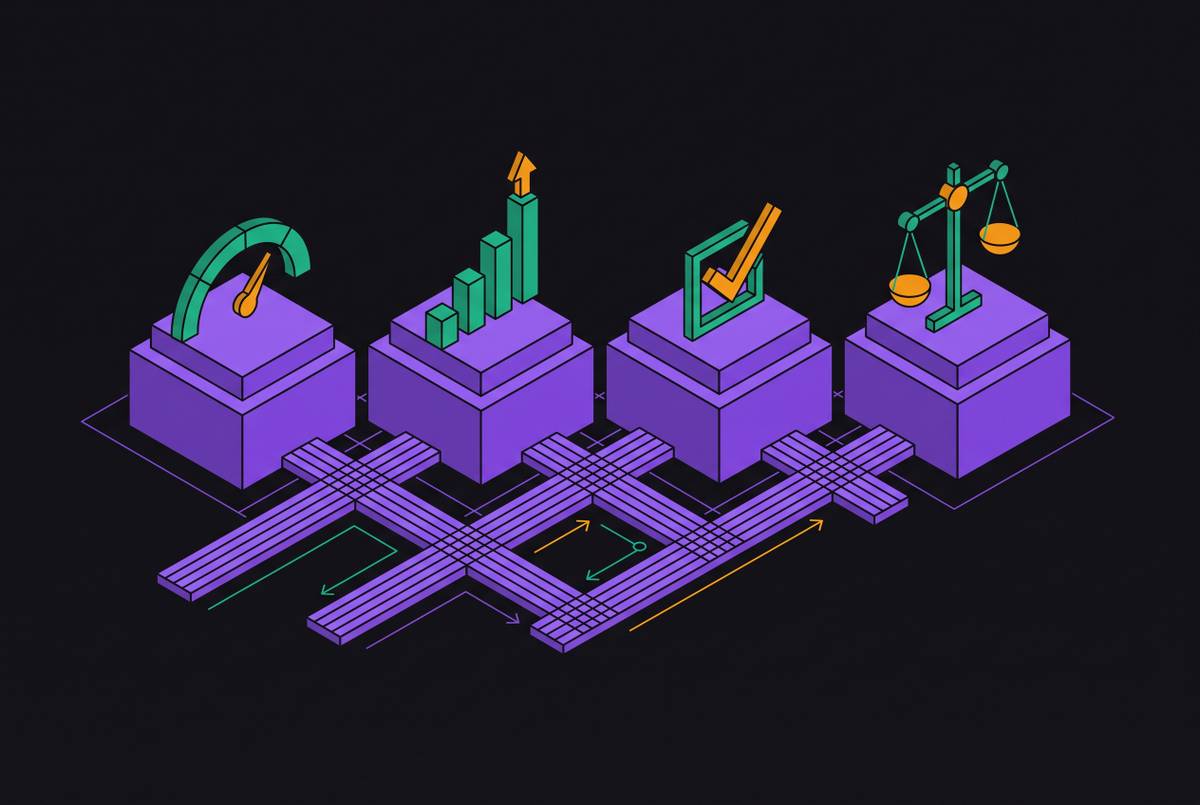
NIST's AI Risk Management Framework rounds out the federal picture. It is technically voluntary, but functionally mandatory for enterprise procurement. It organizes obligations around four functions, Govern, Map, Measure, and Manage, and has become the reference framework procurement teams reach for when evaluating AI vendor risk. Layered on top of the federal frameworks, three states have passed broader automated-decision laws carrying audit-trail obligations: the Colorado AI Act, California's ADMT regulations, and Texas's TRAIGA, though TRAIGA itself does not explicitly require an audit trail. Taken together, these five regimes point in the same direction: an infrastructure that can prove, on demand, what an agent saw, what it did, and under whose authority it did it.
What every agent action must record, field by field
None of the five frameworks above can be satisfied by a system that merely logs that something happened. The audit trail is only as useful as its schema, and a log entry that captures the what without the why, the on-whose-behalf, or the under-what-policy-conditions fails every one of those frameworks at once. Clarm's 2026 audit trail patterns guide lays out the minimum schema every agent action needs to produce, and it's worth walking through field by field, because each one maps directly back to a specific regulatory question.
Start with the tenant identifier, the customer, organization, or business unit the action belongs to. Without it, per-tenant scoping and cross-tenant isolation are impossible to prove, let alone enforce. Next comes the agent identifier, and this one has to include the version, not just the agent's name, because a prompt change or a model swap changes behavior in ways that make version specificity non-negotiable. Distinguishing between these categories is what lets an auditor actually reconstruct the decision path an agent took, rather than guessing at it.
The inputs field has to hold the full prompt, the retrieved documents with version pointers, and any tool arguments, in full, not a summary. Summarized inputs are functionally useless to an auditor trying to determine what the agent actually saw. Model metadata needs to record the provider, model name, model version, parameters, and the response itself, because "what did the model see and what did it produce" is a question every one of the five frameworks eventually asks in some form. Where an approval gate exists, the log has to capture the approver's identity: who approved the action, when, what exactly they saw at the moment of approval, and whether they edited the draft before signing off.
External effect might be the field regulators care about most directly, because it answers the question of real-world consequence. Did anything leave the system? An email sent, a CRM record updated, a webhook fired? What was the response? An agent's decision becomes something that happened in the world once it takes effect, and the log needs to capture both the act and its outcome. Finally, timestamp: wall-clock time paired with a substrate-internal sequence number, because multiple actions can land inside the same clock tick and something still has to establish their order.
The schema is fixed, the log is append-only, and the platform refuses to accept an entry that doesn't match the schema. Free-text log lines written by hand during a debugging session give an auditor working from a fixed evidentiary standard almost nothing usable.
A related gap exists one layer down, at the protocol level. The Pramana research protocol points out that agent communication standards like A2A and MCP standardize the syntax of how agents talk to each other and to tools, but carry no typed attestation of the epistemic ground behind an agent's output. A tool result passed through MCP is just a content blob. It carries no source URI, no measurement record, no inference chain, nothing that would let a downstream system verify where a claim actually came from. Pramana's proposed ClaimAttestation format wraps every consequential output in a typed record, categories like MeasurementClaim, InferenceClaim, AnalogyClaim, and CitationClaim, each carrying a deterministic verify() operation that checks the claim against its recorded source. That is, in effect, the wire-format version of what regulators are asking the audit log to prove at the application layer.
Putting the schema to work against each framework makes the payoff concrete. For a GDPR right-of-access request, the platform has to maintain the linkage between a log entry and the specific data subject whose personal data was involved, because reconstructing that mapping by hand at audit time is not a job a compliance officer should be doing under deadline. For a HIPAA breach notification, the export has to answer what the agent saw and what the agent did for every record touched during the affected window.
The audit trail as a substrate property, not a configuration option
An audit trail a developer can disable, reconfigure, or route around at the application layer fails to function as one. It's a feature, and features get turned off under deadline pressure, which is exactly when regulators come asking questions.
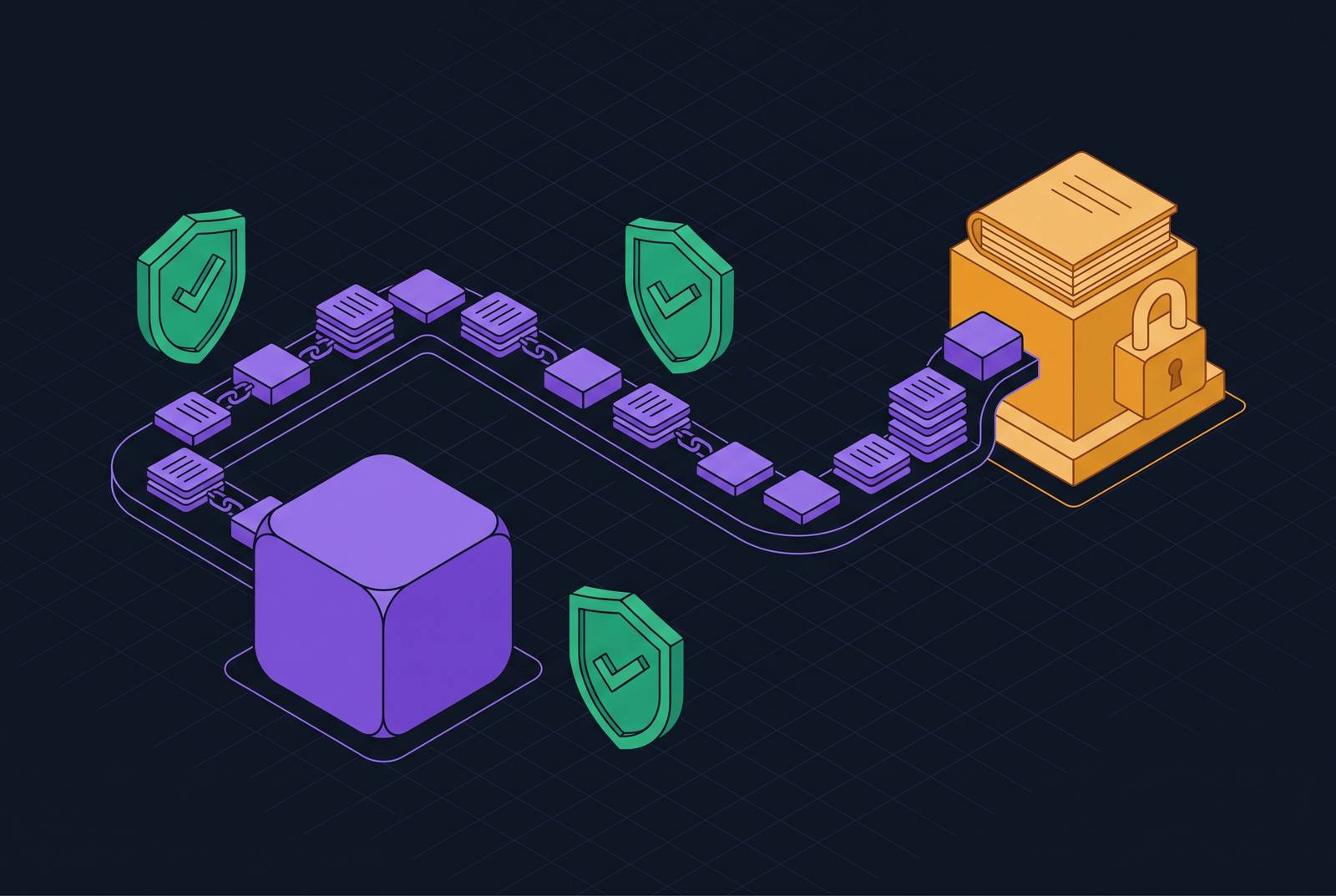
Clarm's 2026 audit trail patterns guide draws the line clearly. In 2025, audit trails were treated as a feature on most platforms, something an operator switched on or off depending on the deployment. The 2026 enterprise expectation has moved past that: the audit trail is a substrate property, captured by default on every agent action, scoped to the tenant, append-only, and exportable in whatever format the regulator has already specified. Responsibility for the trail now sits with the platform rather than the team operating it. It moves the trail from something a team configures correctly (or forgets to) into something baked into the platform itself.
What does that actually require, mechanically? The append-only log writer has to sit on the critical path of every retrieval, every LLM call, every approval decision, every external write. Turning it off can't be a configuration flag somewhere in a settings panel. It has to require a substrate-level code change, the kind that shows up in a pull request and gets reviewed by more than one person. That's the architectural property that actually makes the trail trustworthy: not that logging is on by default, but that logging cannot be quietly switched off by one developer under one deadline.
There's a test that separates platforms that have genuinely done this work from platforms that just say they have. Ask what happens if a developer forgets the tenant filter on a query. The query returns nothing, or it fails. The wrong answer, the one that should worry anyone evaluating a vendor, is "our code review catches that." Code review is a human process, and human processes miss things. A structural guarantee doesn't rely on someone remembering to catch the mistake.
Per-tenant isolation follows the same logic. Scoping tenant access at the application layer, a WHERE clause every developer has to remember to include in every query, is one missed line away from cross-tenant log exposure. Scoping it at the storage layer instead, through row-level security, per-tenant schemas, or fully separate per-tenant databases, makes the wrong query structurally impossible to run in the first place. One approach depends on discipline. The other depends on architecture, and architecture doesn't have a bad day.
Stable identifiers for documents and policies matter for a related reason: they're what makes historical reconstruction possible months after the fact. A retrieval entry has to point to a specific document version and a specific policy version, not just a document name, because source documents change over time. If the underlying document gets updated next quarter, the audit log still needs to show what the agent saw on the day it acted, not what the document says today.
Korix's 2026 compliance checklist puts the choice in stark terms: build the audit trail in from the start, or rebuild the system later, and retrofitting after the audit notice arrives typically costs two to three times what the original build would have cost. Given that healthcare breaches alone averaged $9.77 million in 2024, that's not a cost gap most organizations can afford to discover the hard way.
Agent identity and permissions
An audit trail can only record what an agent did. It has no way to compensate for a system that never defined what the agent was allowed to do. An agent that ran past its intended permissions and got logged doing it doesn't produce evidence of compliance. It produces a very well-documented record of a violation.
That scenario is not rare. A Cloud Security Alliance and Zenity study found that more than half of organizations have already experienced AI agents exceeding their intended permissions, a majority condition in production deployments rather than an edge case. That's not an edge case buried in a long tail of unusual deployments. It describes a majority condition across production agent systems today.
Why does this keep happening? Trace it back to identity. Each agent needs its own unique identity: not a shared credential, not a borrowed API key, not a token handed down from a human user's session. Without a properly defined non-human identity, an agent can't be governed in any meaningful sense. Its actions can't be attributed cleanly, and its lifecycle, provisioning it, updating it, eventually retiring it, can't be managed with any confidence.
Identity alone isn't enough, though. It has to pair with task-scoped authorization at runtime: an agent's permission scope bounded to what the current task actually requires, rather than granted once as a standing entitlement that persists indefinitely. Over-permissioning an agent violates both in the same architectural failure. A single mistake at the identity layer creates exposure across multiple frameworks at once.
HIPAA sharpens this further. Persistent knowledge stores that touch PHI have to meet the minimum-necessary standard at the moment of retrieval, and that constraint has to live at the infrastructure layer, not the prompt layer. Telling an agent in its system prompt to "only retrieve what's necessary" is a suggestion. Enforcing it structurally, so the agent literally cannot retrieve more than the task allows, is a control.
Multi-agent workflows add another layer of exposure. Minirange's 2026 analysis notes that only a small fraction of organizations actually monitor agent-to-agent interactions. That leaves the majority of multi-agent deployments running on an unmonitored permission surface. One agent handing a task to another agent, which hands it to a third, is exactly the kind of interaction that needs scope isolation, and it's exactly the kind of interaction most compliance programs haven't gotten around to watching yet.
Static IAM rules, prompt-level instructions, and after-the-fact log review all share the same weakness once an agent can execute real actions: they check too late, or they only ask nicely. Runtime policy enforcement, deterministic and sub-millisecond, sitting directly on the action path, is what turns identity and permission constraints into something auditable rather than aspirational. An open-source, MIT-licensed agent governance toolkit shipped delivering runtime security governance across all ten OWASP Agentic AI Top 10 risk categories with deterministic sub-millisecond policy enforcement, framework-agnostic with adapters covering several major agent frameworks. It's a useful marker of where the industry is heading: purpose-built enforcement sitting on the action path itself, not a policy document sitting in a compliance folder somewhere, hoping the agent reads it.
Sources
- AI Agent Compliance Challenges: GDPR, HIPAA, SOC 2, EU AI Act
- AI Compliance Checklist 2026: SOC 2, HIPAA, GDPR Guide - DEV Community
- HIPAA & GDPR Compliant AI Agents for Healthcare in 2026
- Audit Trail Patterns for AI Agents. What FINMA, SOC 2, GDPR, and HIPAA Auditors Actually Want
- Pramana: A Protocol-Layer Treatment of Claim Verification in Autonomous Agent Networks
- AI Compliance Checklist 2026: SOC 2, HIPAA, GDPR Guide