Business AI Platforms Ranked for Enterprise Adoption
Governance architecture, not model quality, determines enterprise AI platform fit.
Business AI platforms should be ranked by how well they govern and run autonomous work. Microsoft fits Microsoft 365 and Azure estates, Salesforce and Workday fit workflows native to their systems, and IBM and ServiceNow suit regulated operations. AWS and LangGraph offer more runtime control to teams prepared to build governance, while Google and Dataiku serve different needs for model flexibility and lifecycle oversight.
Why governance and runtime architecture, not model quality, determine enterprise AI success
A procurement agent exposes the weakness of a model-first comparison. It must monitor supplier data, trigger contract review when cost thresholds are crossed, route the review with full context, and log the decision for audit. A prompt cannot supply that operating structure. The work requires orchestration, memory, integration, and clear limits on authority.
Dataiku’s CIO survey found that a large majority of enterprise CIOs regretted at least one major AI vendor or platform selection made in the past 18 months. Governance infrastructure, rather than build capability, was the most cited gap. That distinction changes what a useful ranking measures. Model quality alone cannot show whether autonomous work stays accountable in production.
What enterprise AI platforms actually are in 2026, and what the shift to agents changed
An enterprise AI platform in 2026 is a full lifecycle system. Its scope includes permission-aware data access, ML and GenAI development, deployment, security, monitoring, and orchestration with approvals and human oversight. Unlike rigid scripted bots, autonomous agents can plan multi-step work. The shift from answering questions to taking operational actions raises the demands on every part of that system.
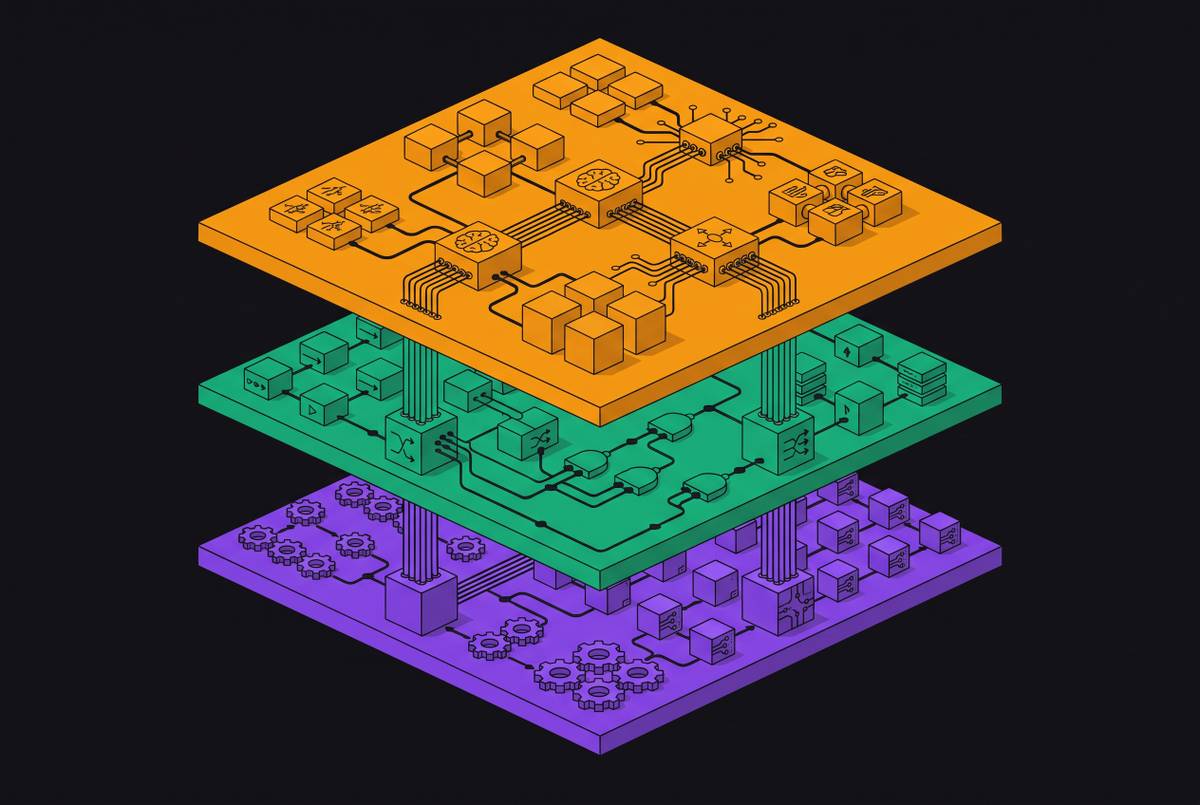
Write-back authority marks the difference in practice. An agent can open tickets, grant access, update records, or complete approval chains without a person doing each step. Three layers make that possible, namely the builder that creates agents, the runtime that executes them, and the governance layer that contains them. The runtime handles coordination, tool calls, and memory, while governance defines the boundaries within which that work may proceed.
The ranking criteria that reflect production reality
For procurement, the comparison should record each vendor’s best use case, key strengths, key limitations, and ideal buyer profile. Security and governance should count most, with deployment and operations next. Data integration, model flexibility, orchestration, usability, compliance, cost transparency, and support complete the picture. The sequence is deliberate. More features cannot make up for a lack of accountability.
To assess governance, start with identity and access, including RBAC/ABAC, tenant isolation, and least privilege. Audit trails must establish who ran what, when, with which data, and what actions followed. Model risk controls include approvals, versioning, evaluation gates, and lineage, while data boundaries require redaction, retention, and clear handling rules. A vendor’s general promise of enterprise security does not answer these concrete procurement questions.
Runtime evaluation asks whether agents retain state across sessions, continue work reliably over time, and delegate to specialized agents with isolated boundaries. Human escalation must preserve the full task context. Cost evaluation then follows the work through context, memory, and tool calls, including limits on runs, users, and connectors. Exact contract prices, proprietary benchmarks, and unannounced features should not determine the ranking. Current capability and roadmap risk need separate judgments.
Microsoft Copilot Studio and Foundry Agent Service: governance breadth at the cost of portability
Microsoft establishes the baseline for enterprises standardized on Microsoft 365 and Azure. Microsoft Purview provides governance covering DLP, audit logs, and compliance certifications including GDPR, HIPAA, and FedRAMP. Agent 365, its governance control plane, became generally available in May 2026. Large enterprises can deploy quickly without taking on many new vendors.
Azure AI Foundry hosts multi-agent orchestration through Microsoft Agent Framework and Foundry Agent Service, supporting sequential, handoff, and A2A-based delegation. Microsoft Agent Framework 1.0 reached general availability on April 3, 2026, unifying Semantic Kernel and AutoGen in one SDK. That consolidation simplifies the developer-facing runtime layer. However, cross-cloud deployment flexibility is constrained, and complex licensing can produce budget surprises at scale. Microsoft’s fit depends on whether ecosystem depth outweighs portability.
Google Gemini Enterprise: multi-model flexibility and A2A protocol leadership
Google Gemini Enterprise offers the widest model flexibility among the platforms in this comparison. Its A2A protocol leadership also makes it a strong candidate for organizations that need agents to work across platform boundaries. That serves a different requirement from Microsoft’s stack-centered depth. Model choice and interoperability become primary when a buyer does not want one model family to define the whole architecture.
However, model flexibility is not the same as deployment independence. Gemini’s ecosystem strengths remain closely tied to GCP, just as Microsoft’s are tied to Azure. A2A addresses agent interoperability, while MCP addresses communication with tools. Neither establishes how an agent preserves work over time or how its actions are governed.
Salesforce Agentforce: governance inside the CRM trust boundary
Salesforce Agentforce fits organizations whose revenue-critical workflows live in Salesforce. Its governance advantage begins inside the CRM data model, with the Einstein Trust Layer, an audit trail stored in Data Cloud, Data 360 Policy-Based Governance, and Command Center. The trust boundary is already part of the workflow. Vertical integration thus provides a sound way to build controls, even as it limits where the system can work.
The Atlas Reasoning Engine enables multi-step planning and self-correction, distinguishing Agentforce from a retrieval-only system. Salesforce reported Agentforce ARR exceeding $1.5 billion, up over 240% year over year, in the quarter ended July 31, 2026. That establishes commercial scale, though not suitability for every workflow. Integration is deepest inside Salesforce, with MuleSoft extending reach to external systems. Buyers whose key processes cross several systems of record must plan for that extra integration work.
AWS Bedrock AgentCore: consumption economics and the infrastructure-first runtime
AWS Bedrock AgentCore suits engineering-led organizations already on AWS that want to configure execution around their own architecture. It offers consumption pricing with published rates and no dedicated free tier, although new AWS customers may apply up to $200 in general AWS credits. The cost model is comparatively transparent. Keeping spending predictable still depends on controlling how much work agents do.
That makes cost control part of both governance and finance. The infrastructure-first approach gives teams runtime flexibility but places more responsibility for governance, audit trails, and spending controls on them. AWS’s general availability announcement describes WGU’s SRE team using the AWS DevOps Agent to analyze a service disruption and substantially reduce resolution time. The example illustrates an operational use case. It does not remove the buyer’s responsibility to build the surrounding controls.
IBM watsonx Orchestrate: regulated-industry governance and cross-framework agent management
IBM watsonx Orchestrate addresses organizations for which governance is a threshold requirement. Buyers in financial services, healthcare, and manufacturing who face EU AI Act high-risk classifications or equivalent requirements need more than a builder that works well. Coordination and accountability belong in the architecture itself. Orchestrate brings agents, workflows, and enterprise tools together within a secure management layer.
Its Agentic Control Plane arrived on AWS and IBM Cloud in June 2026, with support for agents built in other frameworks, including LangGraph and A2A-protocol agents. An organization can govern agents it did not build in Orchestrate rather than treating replacement as the only route to control. A Honda case projects a large reduction in documentation modeling time, illustrating the intended combination of efficiency and auditability in regulated manufacturing.
ServiceNow AI Agents: governance architecture with an explicit kill switch
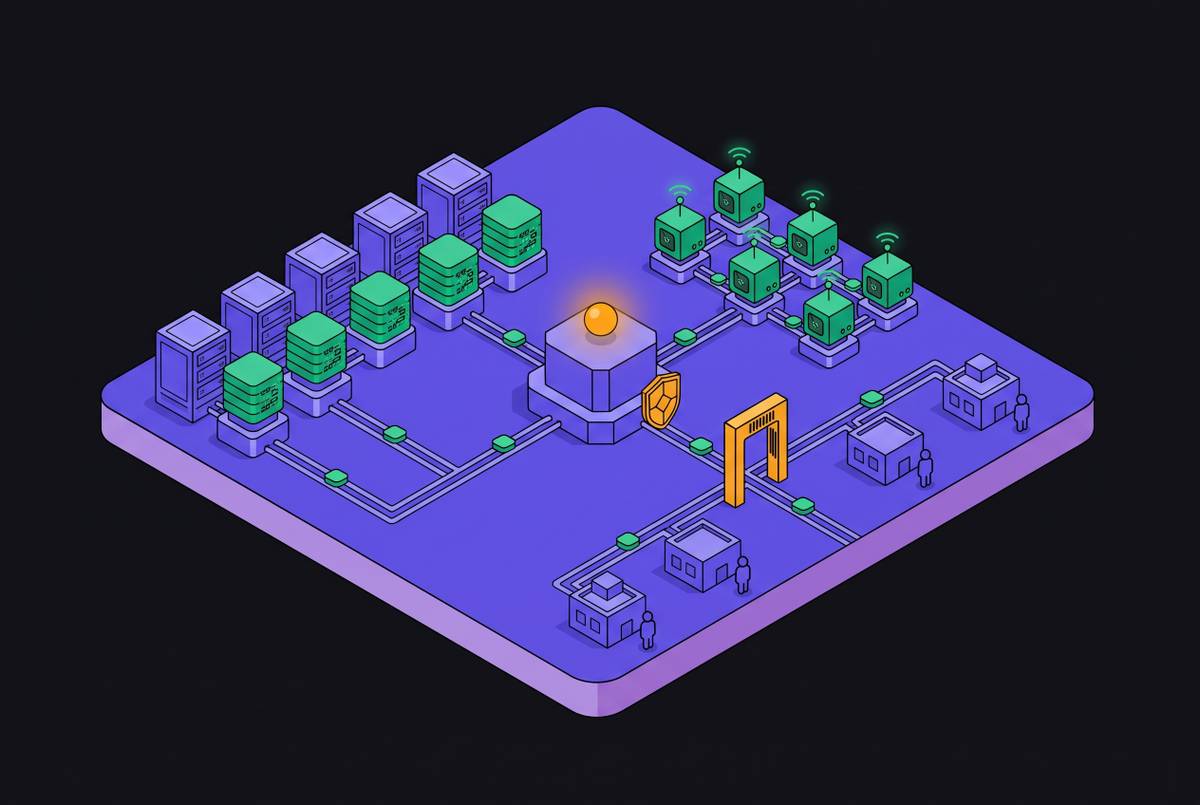
ServiceNow AI Control Tower puts people in charge through a kill switch. Can an organization stop autonomous work when oversight requires it? For IT operations and enterprise workflow teams in regulated industries, that control complements audit trails, model explainability, and data provenance.
ServiceNow also provides 450+ system connectors through IntegrationHub Spokes. That reach allows agents to work across the operational systems involved in enterprise processes, making control over their actions more consequential. Connector breadth and oversight therefore belong in the same evaluation. ServiceNow’s strongest buyer profile is a team that needs both broad operational access and hard governance controls together in one platform.
Dataiku: lifecycle governance across the full agent development and production cycle
Dataiku extends governance from development through production monitoring, including evaluation against both business outcomes and technical uptime. Agent Hub supports full-code development and a code-free visual interface. It is built on a model registry, audit logging, and role-based access control. Dataiku LLM Guard Services adds separate layers of control through Safe Guard, Cost Guard, and Quality Guard.
Dataiku Govern connects oversight across that lifecycle. Reasoning Systems combines data, models, agents, business rules, and human decision logic in pre-built governed systems currently available for manufacturing operations, with supply chain and financial risk domains rolling out later. Dataiku’s strongest fit is an organization seeking lifecycle accountability in regulated or high-stakes work, with its comparative strengths assessed by Dataiku itself and its newer agent-governance capabilities still maturing.
Workday Sana: governance embedded in the data model for Workday-native workflows
Workday Sana embeds agents directly within Workday’s security and data model. Actions are logged with full context, including who triggered them, what data was accessed, what decision was made, and what outcome followed. Agents enforce business process rules and delegation hierarchies on their own. Governance follows the system of record’s existing structure. That is particularly useful when HR and finance workflows already live there.
Specialized agents can hand off tasks across functions, allowing a finance manager to initiate a budget reallocation, route approval, and update records in one conversation. Connections extend to ServiceNow, Slack, Microsoft Teams, Jira, and hundreds of enterprise systems. Pre-built templates can help teams shorten production timelines for common Workday use cases from months to days. Enterprises using other HR and finance systems will not gain the same structural advantage.
LangGraph and open-source runtimes: maximum runtime control at the cost of built-in governance
LangGraph anchors the runtime-control end of the comparison. It is stateful and long-running, giving engineering teams control beyond a stateless inference call. Those properties also create persistent obligations. Memory, execution continuity, audit trails, and spending need a complete enterprise layer of governance that an open-source runtime does not provide.
With this route, engineering takes on the work of building governance. It is a deliberate architectural tradeoff that requires attention during a pilot. IBM’s control plane offers another arrangement by managing agents built in LangGraph. Teams can keep their runtime and add managed oversight. The ideal buyer has either the staff to maintain governance infrastructure or a clear plan to place the runtime within such a management layer.
What the platform comparison reveals about the agent infrastructure layer
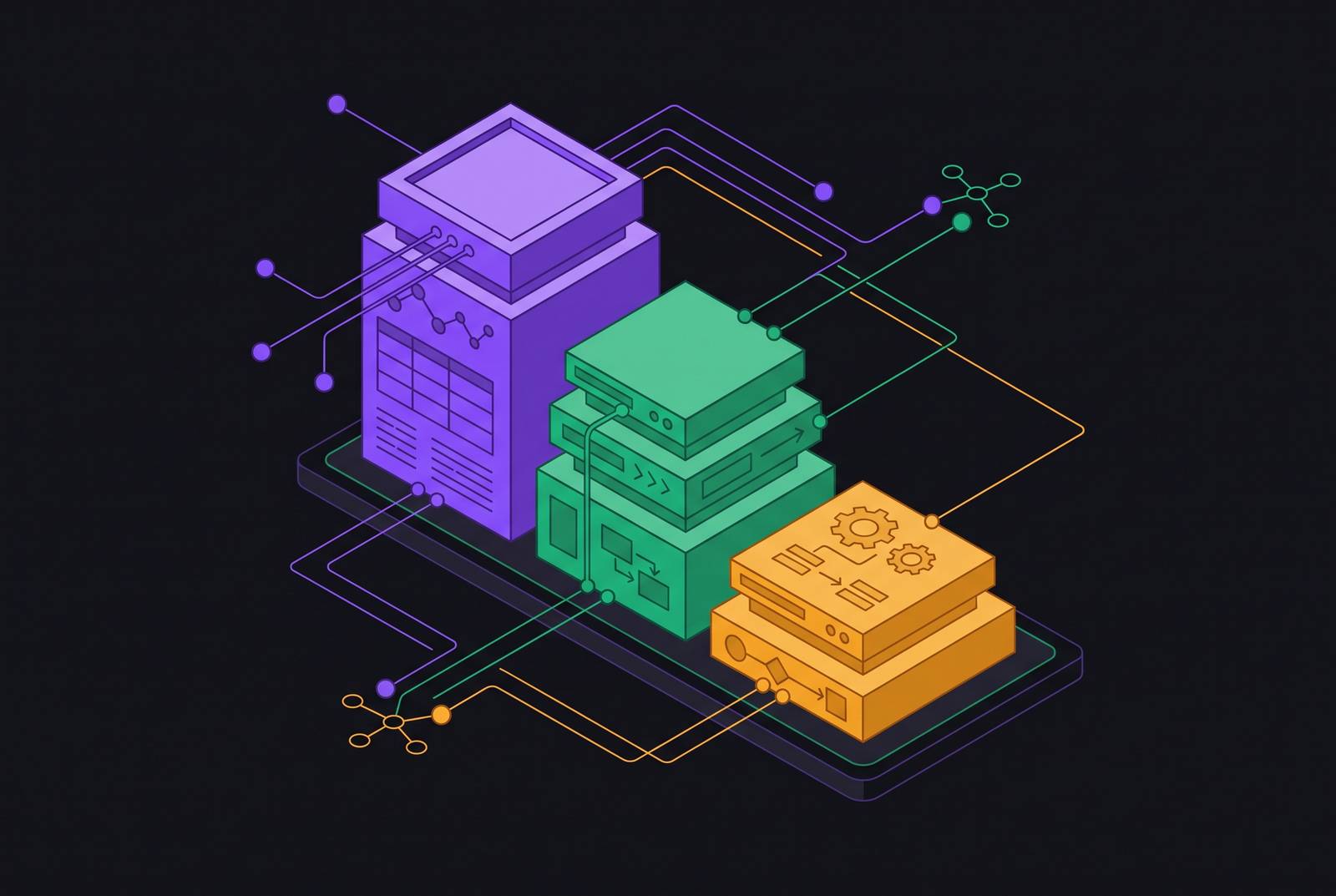
Autonomous agents require an operating layer that combines execution continuity with accountability. The production stack spans the model, runtime, tools through MCP, memory, observability, and evaluations used as a CI gate, with guardrails, deployment targets, and cost controls surrounding them. Managed platforms make choices across those layers. Open-source runtimes leave more of those choices to the buyer.
MCP joined the Agentic AI Foundation in December 2025, helping standardize the interface between agents and tools. But a common interface does not provide durable execution. Agents still need persistent context, scheduled action, audit trails, and selective forgetting for compliance. The comparison shows why autonomous work needs infrastructure built for it, beyond ordinary model calls with extra integrations. The decisive distinction is where execution and control are joined.
How should your company choose AI tools to automate business operations?
The practical selection process starts with four questions. Where do critical workflows live? Microsoft, Salesforce, and Workday fit well within their own environments, while work across systems needs governance that spans those systems. What regulatory obligations apply? IBM and ServiceNow are clear candidates when audit trails, explainability, and data provenance are core requirements.
How much governance infrastructure can the engineering team build and maintain? AWS and LangGraph suit teams prepared to own more of that work, while managed platforms trade some control for built-in oversight. For a small business without a technical team, that distinction favors evaluating managed tools around the systems it already uses. What must agents remember across sessions, and for how long? Persistent state, context management, and selective forgetting need to be assessed from the start.
Google’s flexibility, Dataiku’s lifecycle coverage, or a native platform’s integration depth should count only where they meet the needs of work in production. Roadmap promises, proprietary benchmarks, and low-volume prices should not take the place of that fit. The final test comes after something goes wrong. Can the security team answer “what happened” from the platform’s records?