Business AI Vendors for Mid-Market Companies
Workflow fit, cross-system access, and measurable pilots separate viable vendors from risky bets.
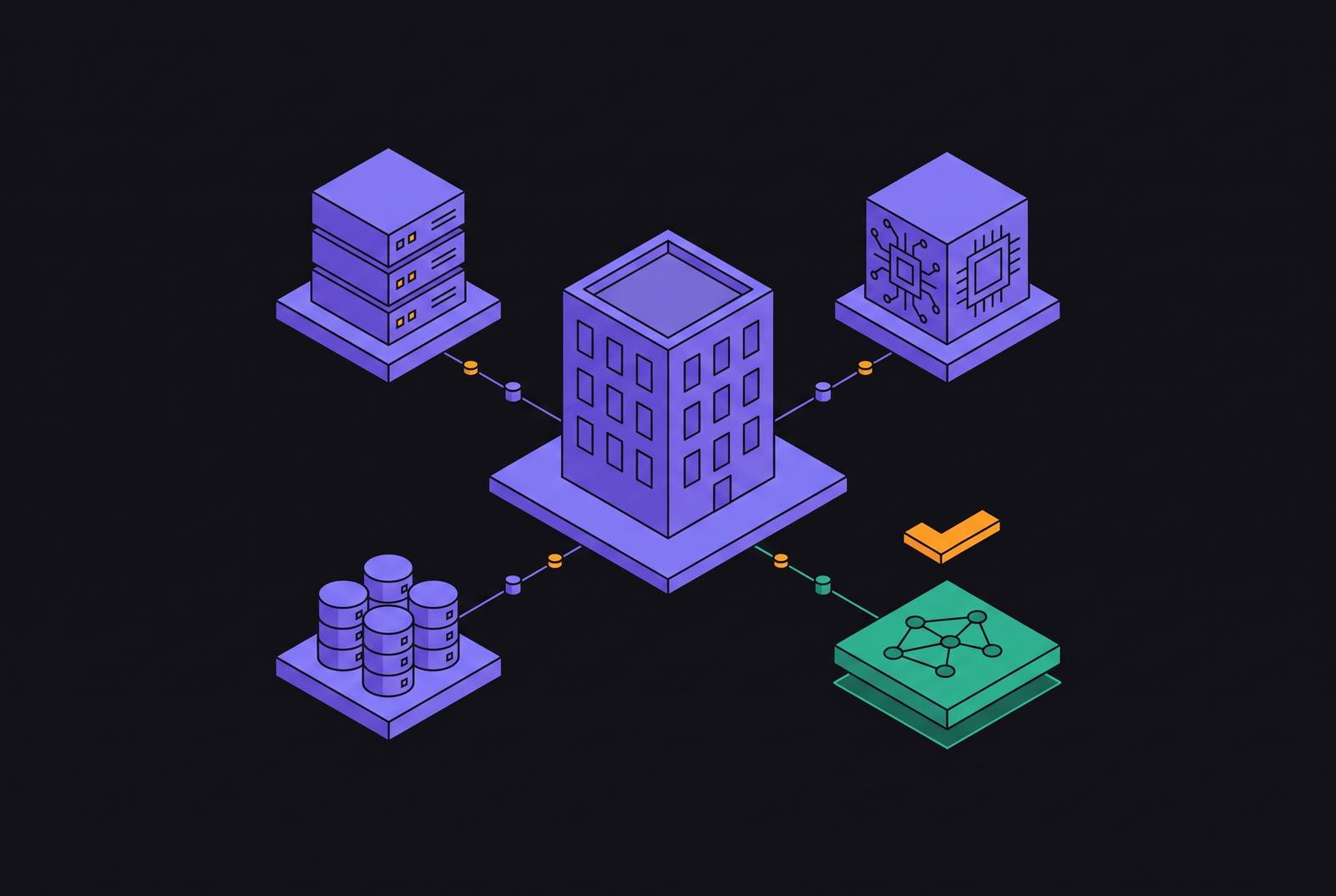
Mid-market companies should judge business AI vendors by whether their agents can finish real workflows with the money, systems, and staff the buyer has. Platform-native agents fit work done mostly in one ecosystem, implementation firms fit companies that need tailored work but have no internal AI team, and developer-first platforms fit teams that build their own agents. The best choice combines workflow fit, cross-system access, persistent memory, inspectable controls, and a measurable pilot.
Why mid-market companies face a vendor evaluation problem that enterprise and startup playbooks don't solve
Mid-market companies need more than a small team’s off-the-shelf assistant, but often lack an enterprise buyer’s AI engineers and integration budget. Their work spans systems, departments, and permission boundaries. Yet the people responsible for connecting those pieces already have other jobs. A vendor’s offer must therefore be judged not only by what it can do, but by how much work it leaves to the buyer.
An enterprise can pay for extensive integration, while a very small team may accept a tool that does only a few things. Mid-market buyers need useful autonomy without either compromise. Meanwhile, AI capability is spreading through competitors of all sizes, putting pressure on slow experimentation. The danger is responding with an ambitious project treated like ordinary software procurement, without establishing how the promised work will actually get done.
What separates an AI agent from an expensive chatbot wrapper, and why it matters for this buying decision
An agent must do more than answer questions. The useful distinction is whether it can perceive an environment, make multi-step decisions, and act across tools without constant human direction. A conversational interface may retrieve useful information, but that does not make it autonomous. If it cannot retain state between sessions or act on a schedule without a prompt, people still have to keep the work moving.
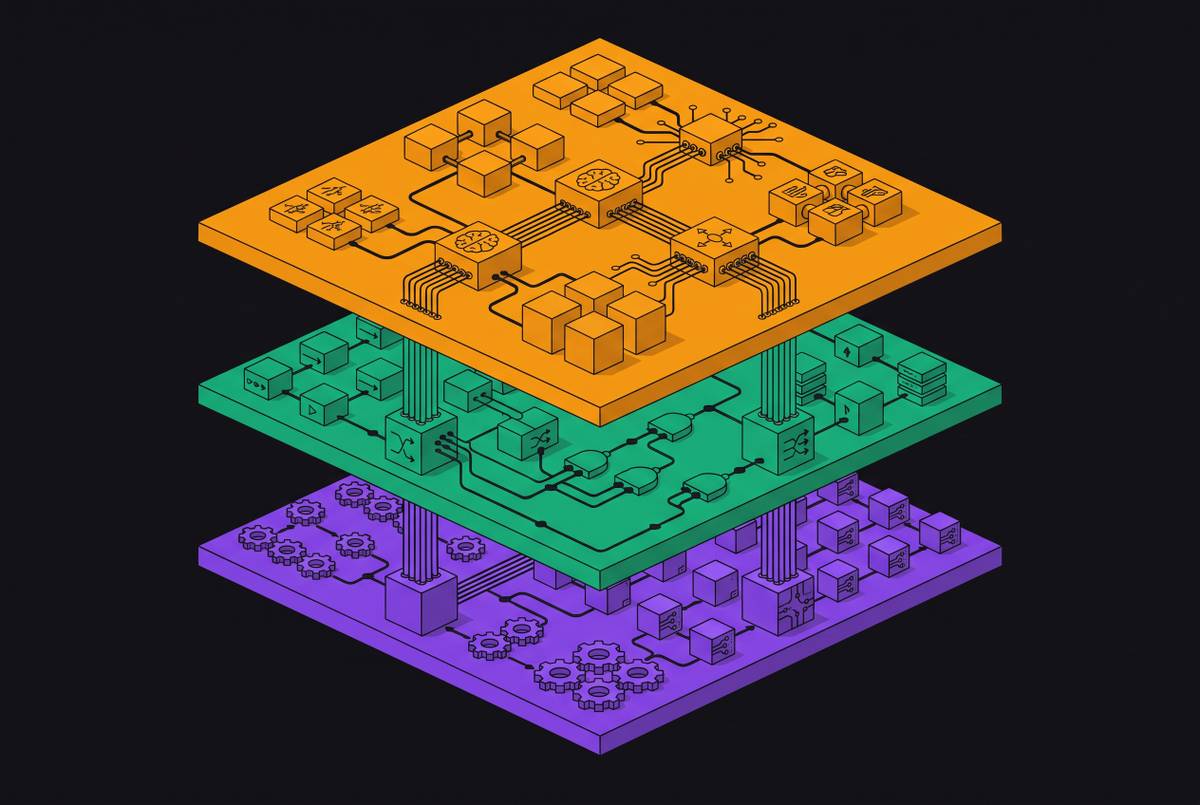
For buying purposes, five functions make that distinction concrete. Reasoning provides the model and decision logic, while orchestration puts the steps of a multi-step task in order. Tools provide the ability to act in connected systems. Memory preserves state beyond the current conversation, and observability makes the agent’s actions and reasoning inspectable. These are evaluation lenses for production architectures.
The consequence of a missing function is practical. Without tools, an expensive chatbot can describe an update but cannot perform it. Without persistent memory, it cannot reliably preserve work across sessions. Without observability, buyers cannot see what happened or why. Buyers should ask vendors to explain each function through the intended workflow before accepting a fluent demonstration as evidence of production capability.
The three categories of AI vendor mid-market companies actually encounter, and what each is optimized for
Platform-native agents are the first category. Salesforce Agentforce, Microsoft Copilot Studio, and ServiceNow’s orchestration layer offer leverage within their existing ecosystems. Copilot Studio is a strong default for Microsoft-ecosystem organizations, while Agentforce suits Salesforce-native organizations. They are a weaker fit when work the company needs to do falls outside those platforms.
Agent development and implementation firms offer a different bargain. These firms design and deploy custom automation around a company’s workflows and systems. For buyers without AI engineering capacity, this can be the fastest route to a business-specific solution. The benefit is fit and ownership, but ongoing change may depend on the partner. Relevant qualifications include delivery at comparable company sizes, timelines measured in weeks, flexible engagements, and clear post-deployment ownership.
Developer-first platforms form the third route, for companies with engineering capacity building differentiated internal agents. They deliberately trade engineering investment for control and architectural flexibility. Their value depends on whether developers can control the runtime, orchestration, memory, and deployment channels. A packaged platform may constrain a distinctive use case, but infrastructure does not replace the team needed to build it.
Why ecosystem lock-in is the most underweighted risk in mid-market AI vendor selection
An agent may start quickly inside an existing platform, yet its reach depends on what that platform supports. Mid-market companies often use different systems for CRM, finance, and support. An agent that works well in only one may cover part of a process while leaving the connecting work to people. Migration later can be expensive.
Future choice takes priority over present preference. These buyers may need to add or change a system of record. MCP provides a standard mechanism for tool and resource access, while agent-to-agent communication protocols make cross-system work more achievable. Open standards can reduce dependence on a vendor’s integration catalog. They do not, by themselves, establish that a particular workflow will work.
To expose that dependence, buyers should ask how the agent calls tools and reads data outside its home ecosystem. What happens to existing agent workflows if the company adds or switches a system of record? Does the vendor let buyers use more than one underlying model provider? What data can the buyer export on exit?
What real deployment speed looks like, and how to read vendor claims about time-to-value
Time-to-first-working-agent is more useful than feature count when the buyer has no dedicated implementation team. The clock should run from contract to useful work in a real process. Setup is only part of that interval. Integration effort, access to the required data, and ongoing administration all belong in the assessment. A capable system that takes months to configure is not a speed advantage.
Pre-built templates for sales qualification, HR self-service, and support triage can compress setup time. Without them, more of the integration burden falls on the buyer. Developer-first platforms offer another kind of speed through single-command installation and familiar tools such as Slack, CLI, or the IDE. That advantage serves engineering teams. It does not mean a company without technical staff can take on the same implementation work.
For an honest comparison, buyers should require a scoped pilot with a measurable outcome, cost estimate, and post-deployment ownership model before committing. Who maintains the agent when the workflow changes? The rollout should move from pilot to process integration, scaled automation, and continuous optimization. That sequence fits limited organizational capacity better than a single transformation project. A vendor unable to define the pilot leaves the implementation risk with the buyer.
The governance and security criteria that separate production-ready agents from those that will stall in procurement
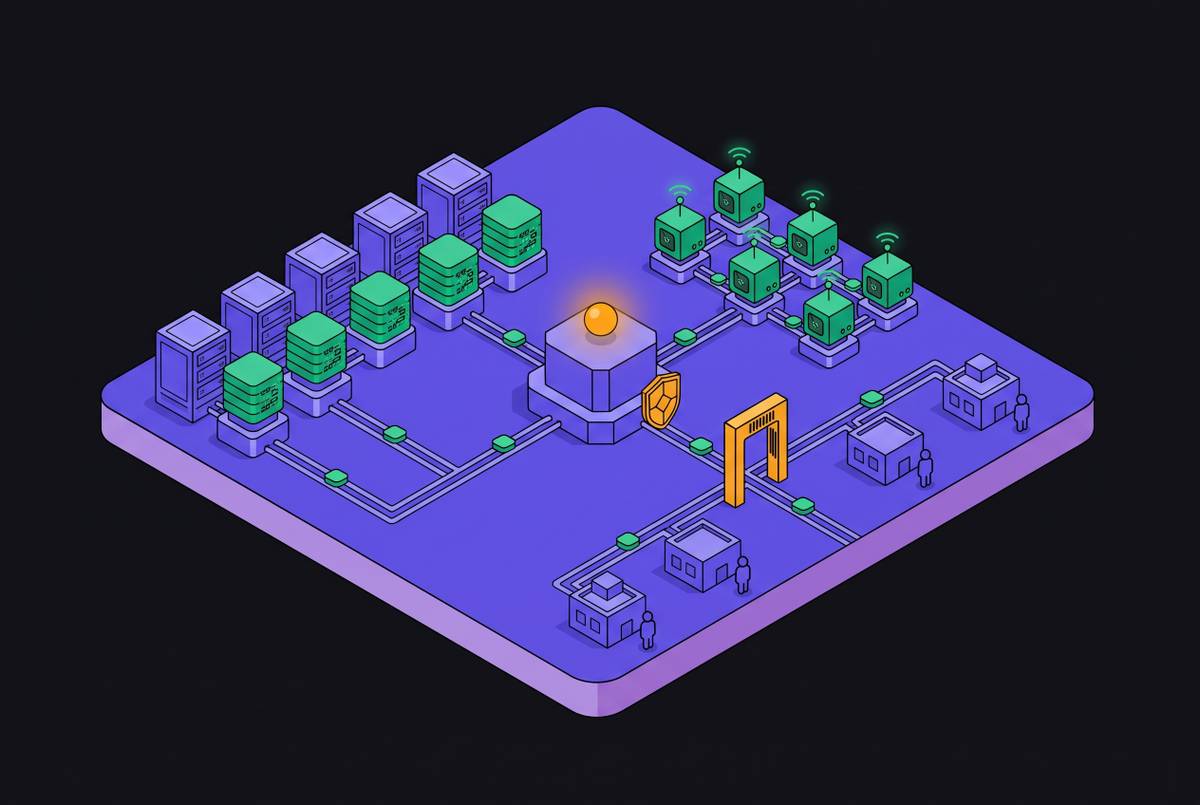
An agent that updates records, triggers workflows, or sends communications needs more than a persuasive business case. IT and legal need to inspect its permissions and audit model. These controls protect the deployment’s path into production. Without them, a useful agent can stall at security review after the business team has already invested time and confidence.
The practical questions begin with the agent’s identity. Does it operate with scoped permissions, or inherit broad credentials? Can the company specify which actions need human approval before execution? Buyers should also ask for a complete, queryable log of what the agent did and why, and establish where data goes and which residency options exist. SOC 2, SSO, audit logs, and human-in-the-loop controls belong in the baseline assessment.
HR deployments make the stakes especially clear. An agent that answers policy questions may also retrieve data about individual employees or start payroll and benefits transactions. Those activities need role-based access controls as well as a helpful conversational interface. They also need escalation paths to human HR judgment. Governance defines where autonomous work can proceed and where a person must remain responsible.
How to evaluate whether a vendor's memory and context architecture will hold up after the first month
Buyers need to test memory on its own because a short demo barely tests it. A context window can appear sufficient while the conversation is brief and controlled. The weakness becomes visible as history accumulates, multiple users interact, or a workflow spans days or weeks. In those conditions, treating the current context as permanent storage undermines continuity. To work in production, the agent must be able to keep earlier decisions.
A durable design separates working context from persistent storage. The context window holds what the current task needs, while a database, vector index, or dedicated memory framework stores decisions, completed work, blockers, and relevant history for retrieval. Handoffs need continuity too. When one agent passes work to another, shared memory must remain available to the next agent. MCP support is useful evidence of integration maturity because it provides structured access to external tools and data, including memory stores, but it is not itself a memory architecture.
Buyers should ask how context persists across sessions and multiple users, and what happens to completed work when a session ends. What context transfers when another agent takes over? Where is memory stored, and can the company inspect or export it? Concrete answers reveal more about durability than a long conversation in a vendor demo.
Which business workflows should mid-market companies automate with AI first?
The first workflow should be chosen for business value and clarity. A well-defined, high-volume process provides measurable evidence that can earn confidence for further deployment. A high-ambiguity, cross-functional process makes that evidence much harder to establish. Buyers should begin with expensive manual work and bottlenecks, then find an agent suited to them. Starting with a platform and searching for applications reverses the decision.
HR self-service is a good choice for helping with benefits questions, leave policy, and onboarding documentation. The scope is bounded, and tickets deflected provide a measure of progress. Mid-market HR teams that serve hundreds to a couple of thousand employees have a lot of the same work to do over and over for teams of their size. Sales qualification and CRM hygiene offer another starting point through reading inbound signals, qualifying leads, and updating records. Their results can be assessed through pipeline metrics and time saved per rep.
Customer support triage can classify tickets and draft responses, with a human approving the draft to keep initial risk low. Response time and resolution rate provide measurable outcomes. Internal reporting offers a different advantage. An agent can pull operational summaries from connected systems, replacing manual aggregation with output that can be compared against existing reports.
Incident investigation is especially useful for engineering teams that have no dedicated SRE function. Agents can surface diagnostic information across connected monitoring tools to shorten the path from alert to understanding. incident.io’s 2026 multi-agent system demonstrated analysis and actionable Slack reports delivered in 1–2 minutes. That example fits a specific operating need. The starting point should still follow the company’s bottleneck, rather than the visibility or novelty of the application.
A working evaluation framework mid-market buyers can apply before a vendor demo turns into a contract
The evaluation should begin with workflow fit, then ecosystem compatibility. Buyers should ask for a reference customer of comparable size using the vendor for comparable work. Claimed capability is not the same as delivery. Next, they should test whether the agent connects to every system the starting workflow touches, using the real stack. This establishes both the business fit and the practical reach of the proposed deployment.
Memory and persistence architecture should come third. The vendor should explain how state survives sessions and agent handoffs, with further probing if the answer relies only on the context window. Governance comes next, with the required security controls documented before the business case reaches procurement. Finally, the vendor should commit to a pilot with a measurable outcome, defined cost, and clear ownership after deployment. That sequence keeps a compelling demo from outrunning the evidence.
For companies building their own agents, the same assessment shifts toward infrastructure. Runtime control, orchestration, persistent memory, and support for CLI, Slack, or API deployment become central. The choice should still depend on how much risk the buyer can take on. A highly configurable platform can overwhelm a team without engineering depth, while a locked-down product can constrain one that needs to build. Mid-market companies have a winnable business AI opportunity, but it calls for a selection process built around their own operating limits.