When to Build a Custom Agent Runtime From First Principles
Build a custom runtime only if you control the identity layer or own the product itself.

Building a custom agent runtime from first principles is one of the most expensive decisions an engineering team can make, and most teams never hit the conditions that justify it. The problem is not ambition. It is that most teams lack a precise vocabulary for what a runtime actually does, so they default to gut feel. This piece supplies that vocabulary, and a sequence for applying it before you write a line of runtime code.
Why a custom agent runtime is a tempting trap for most engineering teams
The instinct to build a custom agent runtime feels like real engineering. You are close to the metal, you control the execution semantics, and you are not renting a critical layer from a vendor. But the agent runtime problem is now real infrastructure work, not a research project. As of mid-2026, packaged agentic platforms ship with orchestration, compliance guardrails, and enterprise integrations that would take months to replicate. Salesforce Agentforce, Microsoft Copilot Studio, ServiceNow Now Assist, and others have already absorbed that cost.
The build side has genuine momentum too. The trap is not incompetence. It is the absence of a diagnostic filter for deciding.
Most teams building a runtime are solving the wrong problem at the wrong layer. They conflate the runtime with the agent, the model, the orchestration graph, or the memory system, and end up building a pile of retrofitted cloud primitives. The rest of this piece gives you the vocabulary to avoid that.
What a runtime actually is and what it must do for agents in production
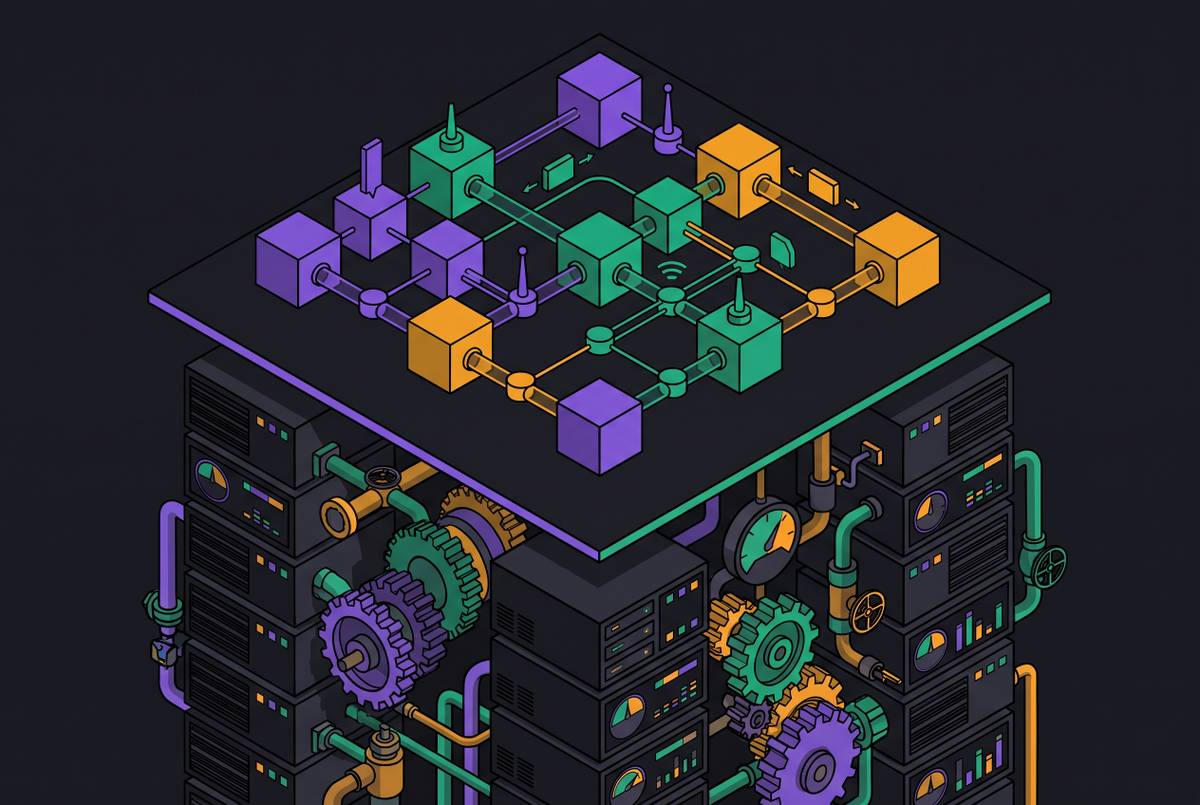
The runtime is not the agent and not the model. It is the execution, authorization, and governance layer where the agent's tool calls actually run. Get the boundary precise and the forcing functions later become legible.
The runtime owns four responsibilities. Credential resolution means resolving which identity is acting, fetching and rotating the right OAuth tokens before a tool call executes. Policy enforcement decides whether the requested action is permitted under current policy before it executes, not after. The audit pipeline records every tool call, the identity behind it, the inputs, and the output in a form that satisfies compliance review. And observability surfaces real-time state of long-running or asynchronous tool calls so engineers can inspect, interrupt, or replay them.
What the runtime does not own matters just as much. The agent's reasoning belongs to the LLM. The agent's tools belong to MCP servers or their equivalent. The orchestration graph, supervisor-worker or not, is an adjacent concern. The memory layer is separate. Each of these interacts with the runtime, but none of them is the runtime. Confuse them and you will build the wrong thing at the wrong layer.
The runtime is the best gateway in an agentic architecture. The agent mediates between the user and downstream systems. The runtime is where credentials are resolved, policy is enforced, and the call is made on behalf of a specific user. That position is what makes it costly to get wrong.
The three profiles where building your own runtime is the right call
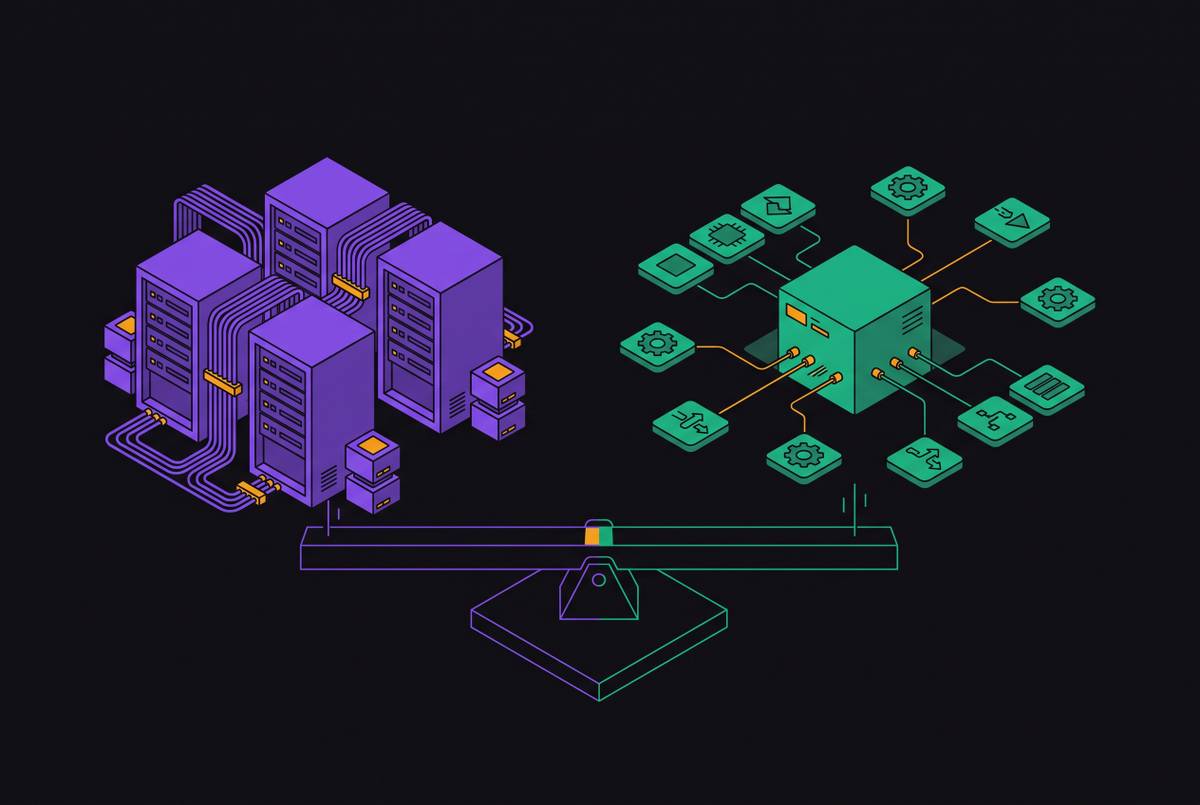
Building a custom runtime is justified in exactly three deployment profiles. Organizations that do not fit one of them will spend engineering budget solving problems vendors have already solved. This is not a hedging statement. The value is in the precision.
Profile one is single-user or internal-only scope. Per-user OAuth, token vaulting, and permission intersection are the hardest parts of the runtime layer. In a single-user or all-internal-API deployment, those problems largely disappear. When there is only one identity acting, the credential and policy surface is small enough that bespoke handling is tractable. Slack's internal security investigation service is instructive here. The team initially repurposed a coding agent CLI as an execution environment for a prototype. That was feasible precisely because the scope was internal and the identity surface was controlled.
Profile two is when agent infrastructure is the core product. If the runtime itself is what your organization is selling, or if deep control over execution semantics is a product requirement, building is not optional. You cannot differentiate on infrastructure you do not own. This is where the runtime becomes a competitive moat. Build custom when the agent runs on your proprietary data and workflows and becomes something a competitor cannot buy off a shelf.
Profile three is all-internal API pipelines with non-negotiable data residency. When data cannot leave the environment for regulatory, contractual, or security reasons, and every API the agent calls is an internal system, a vendor runtime that routes calls through external infrastructure is a structural non-starter. A SaaS that ships data to a vendor's servers is simply not an option, regardless of cost.
Outside these three profiles, building assumes full responsibility for the OAuth lifecycle, credential vaulting, audit logging, and policy enforcement. Each integration becomes a permanent line item on the engineering roadmap. The objection case, teams that are almost in one of these profiles, is handled by the forcing functions in the next section.
Four forcing functions that signal a custom runtime has become necessary
Even teams that do not start in one of the three build profiles can be pushed into the build path by operational realities. Four specific signals mark that transition point. The first forcing function is crossing three integrations. Above it, teams fall into config hell: editing JSON configurations to re-map tool schemas every time an upstream provider deprecates an endpoint, chasing token rotation drift, and handling manual compliance work.
The second forcing function is user-delegated actions. When agents must execute tool calls on behalf of specific human users with distinct permissions, not a single service account, the permission intersection and OAuth lifecycle become genuinely hard problems. Manual implementation carries a high risk of prompt injection and credential leakage if built incorrectly. This is the point where the runtime stops being a convenience and becomes a security boundary.
The third forcing function is asynchronous, long-running read/write operations. Standard LLM timeouts are designed for synchronous, short-lived interactions. Agents that perform investigation pipelines, multi-step data writes, or background reconciliation break those assumptions at the runtime layer. The CLI prototype was not suitable for production because it lacked real-time observability of investigations and integration into existing detection tools. Those gaps only appear when operations run asynchronously.
The fourth forcing function is compliance-grade audit requirements. That means audit logs for every tool call, every credential resolution, and every policy decision. If your compliance team requires that, the audit pipeline moves from a feature to a structural component, and a vendor runtime that cannot expose it becomes a liability.
What the runtime must handle in memory and state to hold up in production
A production runtime must support four memory tiers. In-context working memory holds recent turns, the current scratchpad, and the small number of retrieved memories relevant to the specific prompt. Semantic vector storage holds long-term summaries of interactions, learned patterns, and user preferences, optimized for semantic retrieval.
The practical discipline is two-tier. Tier one treats the context window as RAM: current conversation context, active tasks, recent tool outputs, and a small number of retrieved memories. It is short-lived, with sub-millisecond retrieval, like Redis. Tier two is the persistent memory layer: a SQL store, vector index, or dedicated framework that holds everything else and feeds tier one on demand. It has indefinite retention and is optimized for semantic search.
The part generic tooling consistently skips is governed memory, not just retrieval. Production agent memory requires explicit rules for what may be written, who can read it, how a newer fact supersedes an older one, when information expires or is deleted, and what evidence must be verified before memory can influence an action. Without those rules, an agent that cannot remember context or act on a schedule degrades into an expensive chatbot. It restarts every session cold, with no persistent state to carry decisions forward.
How the security blast radius grows with every integration you own
Building a custom runtime does not contain the security problem. It scales it with every integration, user, and policy change. The real choice in 2026 is risk, not cost. Buy a runtime and that work moves to a vendor already audited for it.
What teams own when they build is a permanent maintenance obligation. Every broken connection when an upstream API changes its schema. Every expired OAuth token when custom retry logic fails to handle the edge case. Every security patch for the credential vault, the audit pipeline, and the policy enforcement layer. Every regression when a model update changes tool-calling behavior in a way the runtime did not anticipate.
The hidden maintenance cost is the part most teams underestimate. An AI agent is not a ship-it-and-forget-it asset. Over three years, run-and-maintain spans model and API costs, infrastructure, and roughly 15 to 25 percent of the original build cost annually in maintenance. Unmaintained agents drift, break on API changes, and lose team trust. Non-deterministic systems degrade quietly, and catching drift requires continuous evaluation of output quality, tool selection, and task completion, not just uptime monitoring.
What good first-principles design looks like when the build is genuinely justified
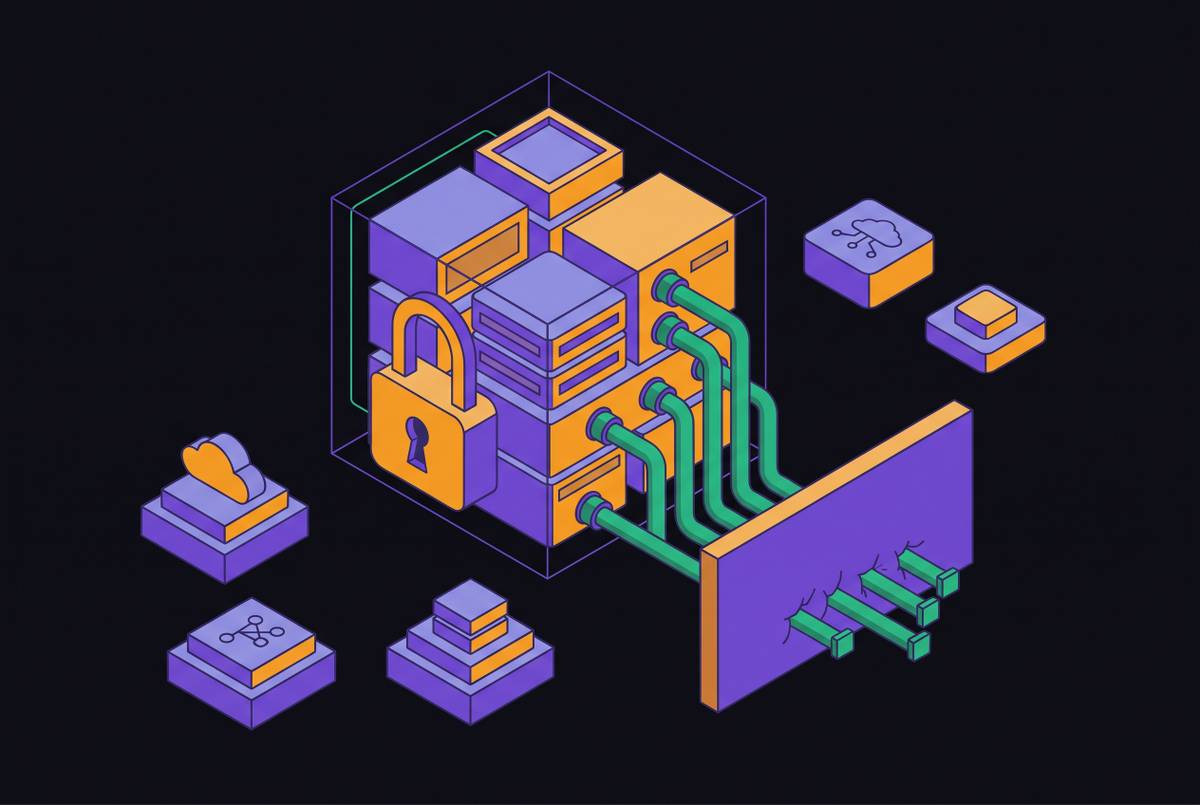
When the build is justified, the runtime must be designed from first principles, not assembled from retrofitted cloud primitives. Start with isolation at the execution layer. Each agent runs in an isolated sandbox with its own identity and access scope, not a shared process that inherits ambient credentials. Per-agent identity and access management is the foundation. Policy enforcement and audit logging are built on top of it, not bolted on later.
Design the policy engine as a first-class component, not a filter. It governs agent behaviors for compliance, resource allocation, and permitted action scope. It must sit between the agent's decision and the tool call, not downstream of it. Policy must be inspectable, testable, and version-controlled, not embedded in prompt strings that change with every model update.
Use standardized adapters for the connector layer. The connector and adapter layer enables interoperability with APIs, databases, and legacy systems. Standardized adapters, with MCP as the current de facto standard, mean new integrations do not require rebuilding the runtime layer each time. The MCP SDK implements the specification over JSON-RPC 2.0 and supports both stdio for local process communication and Streamable HTTP for remote execution. The MCP servers become the easy part. The runtime wrapping them is the actual work.
Build the audit pipeline into the execution path from day one. OpenTelemetry-compatible logging is not a feature to add when compliance asks for it. It is structural. Every tool call, every credential resolution, and every policy decision must be recorded in the same execution path that runs the action. The AWS DevOps Agent case shows what a well-instrumented runtime enables. It detected and diagnosed a production incident in just 4 minutes without human intervention, starting when a CloudWatch alarm triggered, systematically testing hypotheses, identifying DynamoDB write throttling caused by a recent deployment, and posting a complete root cause analysis with the problematic commit and a suggestion of either on-demand capacity or a rollback. All of that happened within a runtime that had observability, identity, and policy built into the execution layer.
How to apply the decision: a sequence engineers can follow before writing a line of runtime code
The decision to build a custom runtime should follow a fixed sequence of diagnostic questions, not a cost estimate. The cost only becomes meaningful after the technical forcing functions are confirmed. Step one is confirming the deployment profile. Is this single-user or all-internal? Is the runtime itself the product? Does data residency make any external runtime a non-starter? If none of the three profiles fit, the default path is to use an existing runtime and build only the MCP servers that connect agents to proprietary systems.
Step two is checking the four forcing functions against the current or projected deployment. Count the integrations planned for the next two quarters. If the number is approaching or past three, the maintenance burden calculation changes. Map every action the agent will take to the identity that authorizes it. If any action requires user-delegated permission, multi-user auth is in scope. Identify every operation that will run longer than a synchronous LLM timeout. If any exist, asynchronous execution handling is in scope. Ask the compliance and security teams whether audit logs are required. If yes, the audit pipeline is in scope from day one.
Step three is pricing the maintenance obligation, not just the build. Model drift is a standing liability, and catching it requires continuous evaluation of output quality, tool selection, and task completion. That is a permanent function, not a project.
Step four is scoping the build to the runtime boundary and no further. A common failure mode is building a custom runtime and then also rebuilding the orchestration layer, the memory layer, and the connector layer from scratch. Each of those is a separate decision that requires its own justification. The runtime boundary is execution, authorization, and governance. Everything outside it should be adopted from existing infrastructure unless a forcing function specifically requires otherwise.
The teams most likely to get this right are the ones who treat the runtime as infrastructure designed from first principles, purpose-built for the specific execution, governance, and persistence requirements their agents actually have. An operating layer with a boundary you can defend. The forcing functions tell you whether to build. The design commitments tell you what to build. The sequence tells you when to stop and adopt instead.