Self-Hosted vs. Managed Agent Orchestration TCO Analysis
Hidden operational costs determine the true expense of agent orchestration deployments.

The self-hosted versus managed debate used to be a clean fork in the road. The self-hosted versus managed fork has collapsed: the real cost gap now hides in operational layers that neither a VPS invoice nor a SaaS subscription line ever shows, and that gap decides whether a team spends three months building on the wrong foundation.
The self-hosted vs. managed framing's structural flaw
Treating this as a binary choice gets the whole analysis started on the wrong foot. The two categories have bled into each other so thoroughly that picking a side tells you almost nothing useful about what you're actually running. Tool execution happens inside the customer's own environment, but orchestration stays on vendor infrastructure.
"Self-hosted" and "managed" describe who owns the control plane, nothing more. If the inference call leaves the building, it doesn't matter who owns the scheduler.
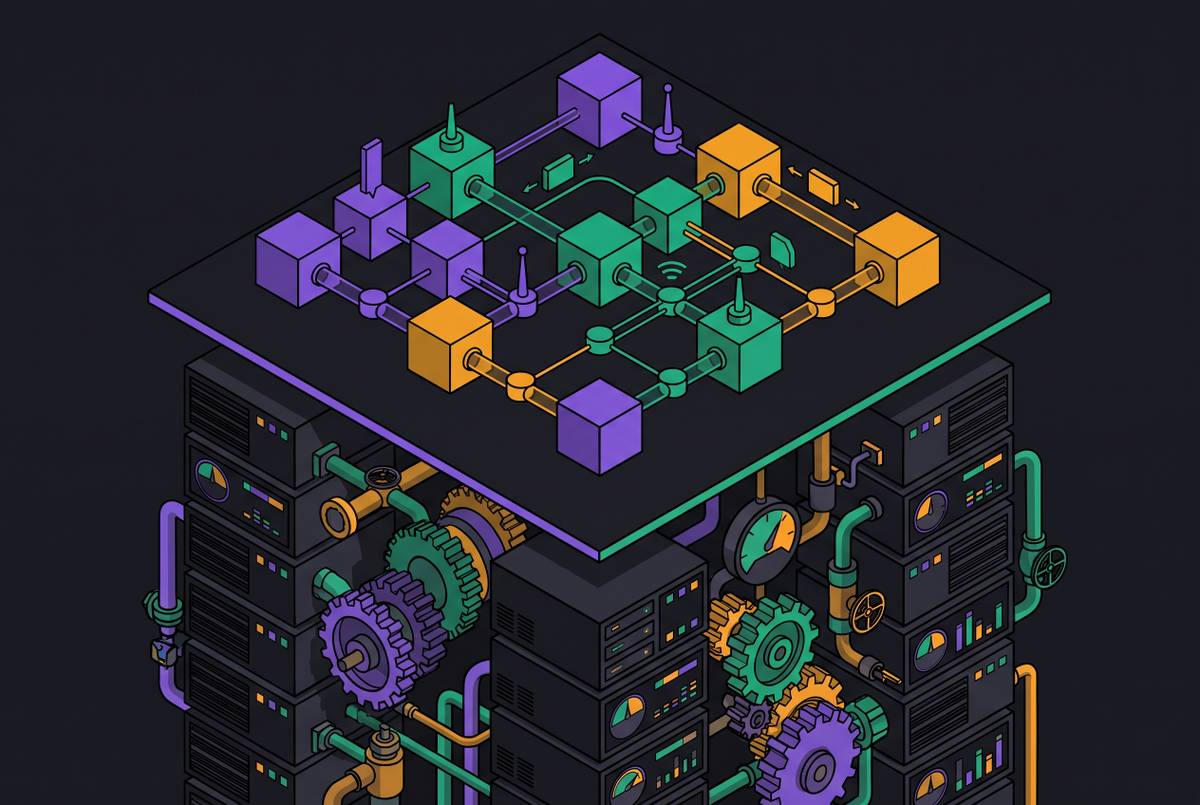
So comparing a VPS bill against a SaaS subscription number misses the point. A more honest map breaks deployment into three tiers: Tier A, where the vendor manages the control plane but workloads run inside the customer's own VPC; Tier B, where the platform runs entirely on customer-operated infrastructure and the customer owns the runtime and audit trail; and Tier C, fully air-gapped, with no network path back to vendor infrastructure at all, and the real decision is which of these tiers fits your compliance posture, your team's capacity, and your cost model.
What vendor comparison page cost numbers measure
Vendor comparison pages are built around the numbers that are easiest to put in a spreadsheet cell: the compute line, the subscription fee. Most of what actually drives spend sits in categories that don't appear on either side's pricing sheet.
On the self-hosted side, the number you see is the VPS or GPU rental charge.
On the managed side, the number you see is the subscription fee or the per-run charge.
The asymmetry runs even deeper than that. One side bleeds slowly and visibly. The other side looks free until it isn't.
The full cost stack for self-hosted: infrastructure, engineering FTEs, and operational overhead
You pay self-hosting's real price in engineering hours, not server rental. Any cost model that starts with the hardware bill and treats staffing as an afterthought is going to land on the wrong number.
Start with infrastructure: GPU compute for inference if the models run locally, purchased outright or rented from a cloud provider, storage for model weights at scale, and redundancy and backup systems to keep the thing running when something breaks. This is the layer the "VPS bill" framing actually captures, and it's the smallest piece of the stack.
Above that sits operational overhead, and this is where the real spend lives. Budget somewhere between 0.5 and 1.0 FTE on an ongoing basis just for patching, upgrades, and incident response. Plan for a meaningful share of the original build effort to recur every year as upkeep. That number almost never makes it into the initial project estimate, and it causes the most damage later.
On top of that sits model licensing. Proprietary models licensed for on-premises deployment carry per-seat or per-token charges layered on top of whatever infrastructure is already running.
Scale changes the math, but only for specific organizations. A large GPU cluster, run under dedicated MLOps staff with hardware on-premises, has a cost curve that genuinely differs from a single-agent self-hosted deployment. Per-unit costs do come down at scale, when a platform team already exists and its capacity is spread across many services.
So where's the break-even point? All three need to be true. Missing even one tilts the math back toward managed.
The full cost stack for managed platforms: subscription economics, lock-in exposure, and abstraction ceilings
Managed platforms deserve the same scrutiny, because their costs take a different shape, not a smaller one. The operational burden doesn't vanish so much as transfer, and what replaces it is a different category of risk, one that only bites when circumstances change: a model gets deprecated, a pricing unit shifts, an audit lands on the calendar.
Some of that trade is a genuine win. Patching, scaling, monitoring, retry logic, secrets rotation, and model upgrades when a provider deprecates an old version: all of it moves off the engineering team's weekly task list and onto the vendor's. That list recurs indefinitely if self-hosted, so handing it off is a real and quantifiable savings.
Lock-in is the cost that replaces it.
There's also a ceiling on what the platform can express. Managed platforms ship with a fixed set of primitives, and the vendor's architecture choices are what shaped them. For teams building something genuinely novel, that abstraction becomes a limit on what can be built, not a starting point to build from.
Model control is the other thing handed over. Managed platforms decide which models run and when they get upgraded. If the requirement is a pinned model version for reproducible output, a fine-tune trained on proprietary data, or the ability to swap weights on a custom schedule, none of that is possible without owning the serving layer directly.
Compliance is where managed platforms are usually underrated. An under-resourced self-hosted build can carry more compliance risk than a well-governed managed platform, not less.
Compliance posture, not team size, as the most reliable decision trigger
Compliance requirements settle the deployment tier decision faster than any cost spreadsheet, because they create constraints that don't bend to budget preferences. A regulation either applies or it doesn't.
Three specific triggers push a deployment from managed SaaS toward hybrid or fully self-hosted: data crossing into HIPAA-eligible territory, FedRAMP requirements coming into play, or workloads falling under EU AI Act Annex III high-risk classification. Any single one of these changes the required posture, regardless of team size or what the budget would prefer.
The EU AI Act (Regulation 2024/1689), DORA (Regulation 2022/2554), and NIS2 (Directive 2022/2555) each impose documentation and audit-trail obligations that are easier to satisfy when you own your own infrastructure stack.
CLOUD Act exposure adds a separate trigger for EU public-sector and defense-adjacent buyers, and it reaches any provider subject to US jurisdiction, not only those headquartered there. A vendor's no-training commitment is a contractual promise. Some regulatory regimes simply don't accept contractual promises as a substitute for physical control, no matter how well-drafted the contract is.
Self-hosting has its own trap buried inside this logic. If a self-hosted framework calls a commercial model API on every request, it is still sending data outside the perimeter on every single inference call. The compliance case for self-hosting only holds up when the entire stack, including model serving itself, stays inside the boundary. Owning the orchestration layer while renting the model from somewhere else doesn't close the gap.
Any team that hasn't mapped its compliance obligations against these three tiers is running a cost analysis on an incomplete problem.
How hybrid configurations absorb the trade-offs
Once compliance and cost get taken seriously side by side, hybrid stops looking like a compromise and starts looking like the conclusion the analysis was always pointing toward. In a weighted enterprise comparison, hybrid wins because its strengths land exactly where the pure models are weakest: compliance flexibility, data residency, governance, while still preserving fast time-to-value for the workloads that don't need full custody.
Several concrete versions of this are shipping already. UFO exemplifies this convergence: as a workspace-based AI work platform for teams, it runs tool-connected agents inside customer environments while keeping orchestration and memory centrally managed, which dissolves the binary distinction entirely and replaces it with a single practical question, which tier matches your compliance and operational needs.
Hybrid spreads the risk across both sides. You get model control for sensitive calls specifically, without rebuilding the entire stack to get it.
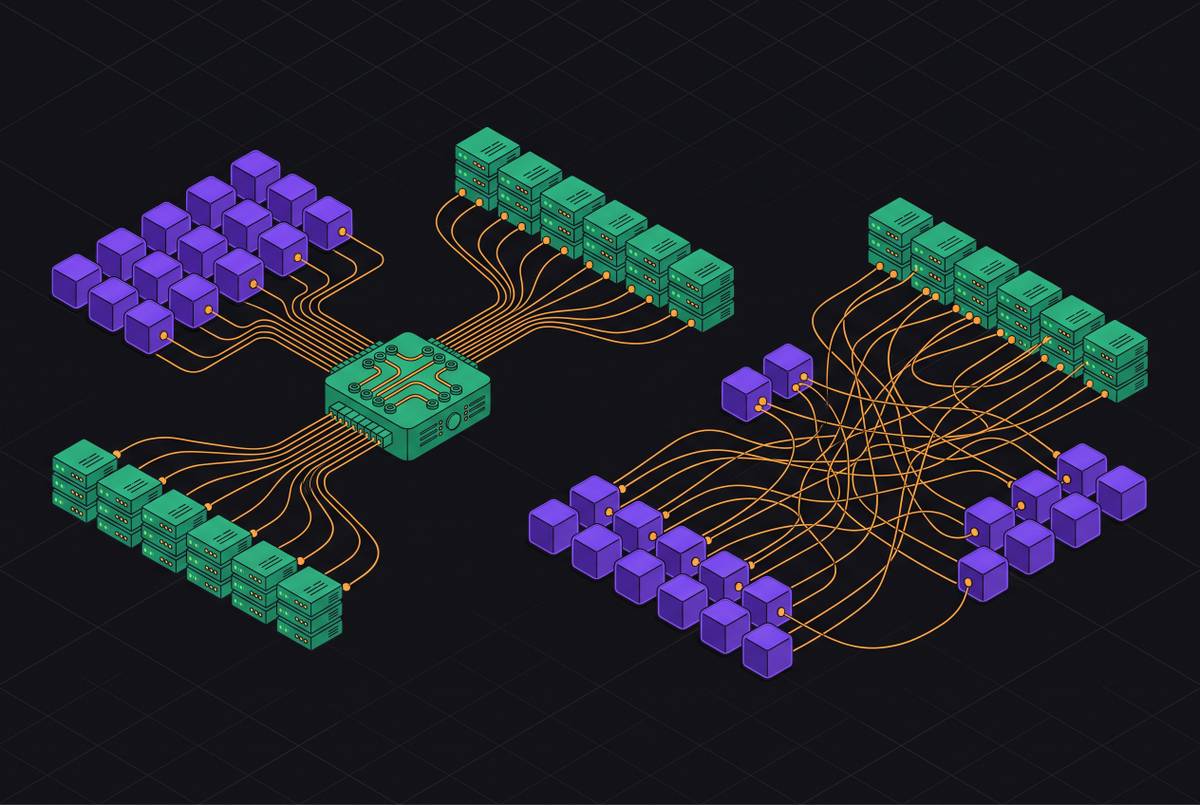
None of this is free, but the engineering cost is bounded. The burden gets shared between vendor and customer instead of landing entirely on one side, and the real investment goes into the interface between the managed control plane and the self-operated data plane. That's a smaller surface to engineer than a fully self-hosted build, and a larger one than pure managed, sitting exactly where the trade-offs above suggest it should.
Persistent state and memory management as a hidden TCO multiplier across all three tiers
Memory infrastructure is the single most underpriced cost category in agent deployment, hitting every tier the same way because it's architecturally difficult and almost never appears in the initial estimate.
An agent that forgets everything between sessions is, functionally, a stateless API call wearing an agent costume. Persistent context is what separates something doing real work from an expensive chatbot. If a deployment is meant for production use, memory infrastructure isn't optional.
On the self-hosted side, the team owns every layer: vector database operations, checkpoint storage, and the write-time consolidation logic that keeps the memory store from bloating into something unmanageable.
The pattern that matters most for multi-agent systems is cross-session, cross-tool memory continuity, where one agent writes to a memory store that another agent can read. Any team that skips modeling this separately will underestimate self-hosted TCO and overestimate how operationally simple a managed platform really is, if that platform doesn't treat memory as a first-class feature.
Engineering overhead at the orchestration layer
The orchestration layer, not the model choice and not the deployment tier, is what determines ongoing engineering cost in production. Most teams only discover this after they've already committed to an architecture.
A multi-agent SRE pattern makes the stakes concrete. None of that is a model problem. All of it is orchestration engineering.
There's a documented payoff for getting this right. The Azure SRE Agent case shows a shift from a large set of bespoke tools with prescriptive prompts toward a filesystem-based context engineering approach, exposing everything as files and letting the agent use standard read, search, and shell commands. That shift produced a substantial improvement in task completion on incidents the agent hadn't seen before.
This cost lands harder on self-hosted builds, where the team owns the durable execution runtime, the fault-tolerance logic, and the observability stack directly. An agent operating system has to handle the same concerns for agents, and that work has to happen whether a team builds it or buys it.
That's the real decision framework: four variables, mapped in order. Compliance posture comes first. If any regulatory trigger applies, data residency mandate, HIPAA-eligible data, FedRAMP, EU AI Act Annex III high-risk, start the analysis at Tier B or Tier C and work backward to figure out what managed services can layer on top, not the reverse. Model control requirements come fourth: if reproducible output from a pinned model version, proprietary fine-tuning, or weight-level control is a real requirement, the serving layer has to be customer-controlled, and that overrides whatever convenience argument managed platforms otherwise offer.
Four conditions together, not separately, point cleanly toward self-hosting: a hard data-residency requirement written into regulation or contract, a compliance mandate requiring physical custody such as air-gapped or defense-adjacent work, a genuine need to control the model itself through pinning or fine-tuning or weight swapping, and an existing infrastructure team with the spare capacity to take it on. Time-to-value runs in days rather than months, and the entire operational maintenance list transfers off the team's plate.
Where UFO fits in the agent infrastructure stack
Every hidden cost this analysis has surfaced, orchestration engineering overhead, memory stack complexity, persistent state management, scaling infrastructure, is precisely what a purpose-built agent operating system is designed to absorb. How much of that a given platform actually handles is what determines where it sits on the TCO curve.
UFO is built as a purpose-built Desktop AgentOS for autonomous agents on Windows. It treats scheduling, memory management, tool dispatch, and persistent state as first-class concerns from the start, rather than capabilities bolted on top of general-purpose cloud infrastructure after the fact.
Setup cost matters here too.
For teams running the hybrid pattern described earlier, a customer-operated data plane paired with managed orchestration, UFO's role as infrastructure substrate matters specifically because it sits between the models and the agents, handling the operating-system-level concerns, scheduling, memory, storage, tool dispatch, that this analysis has already identified as the largest source of hidden cost.
Agents that can't hold context across sessions or act on a schedule fail in the exact way flagged earlier as a TCO multiplier. UFO treats persistence and the ability to act proactively as baseline requirements, not optional add-ons layered in later.
AWS Bedrock AgentCore gives you a managed runtime path inside the AWS ecosystem, so it cuts down on infrastructure ownership, but it ties you to a single cloud provider along with the model-control trade-offs described earlier in this piece.
The three-question audit before committing to a deployment architecture
If you work through three honest answers before you commit to any architecture, you'll catch most of the hidden TCO a vendor comparison page never shows.
First, compliance: has every data category the agents will touch been mapped against the specific regulatory obligations that govern it? Compliance requirements override cost optimization more reliably than anything else in this analysis, and finding them after the architecture is already built is the exact scenario this whole framework is meant to prevent.
Second, staffing: does someone already on the team run production services today, and do they have room to take on an ongoing operational commitment? The staffing assumption is the most commonly hidden variable in every self-hosted cost model.
If not, every tier's TCO estimate is incomplete, because memory infrastructure cost is additive to base deployment cost and scales with the agent's task surface, not simply with traffic volume.
If a team can answer all three honestly before it chooses a deployment tier, it has already surfaced the hidden costs that otherwise turn into a three-month sunk cost discovered too late. That's the specific failure this framework exists to catch, and it's available to run before a single dollar gets committed to an architecture.