AI Assistants Ranked by How Little Orchestration Overhead They Demand at Under Ten Engineers
Claude Code, Goose, and OpenCode cost small teams the least plumbing.
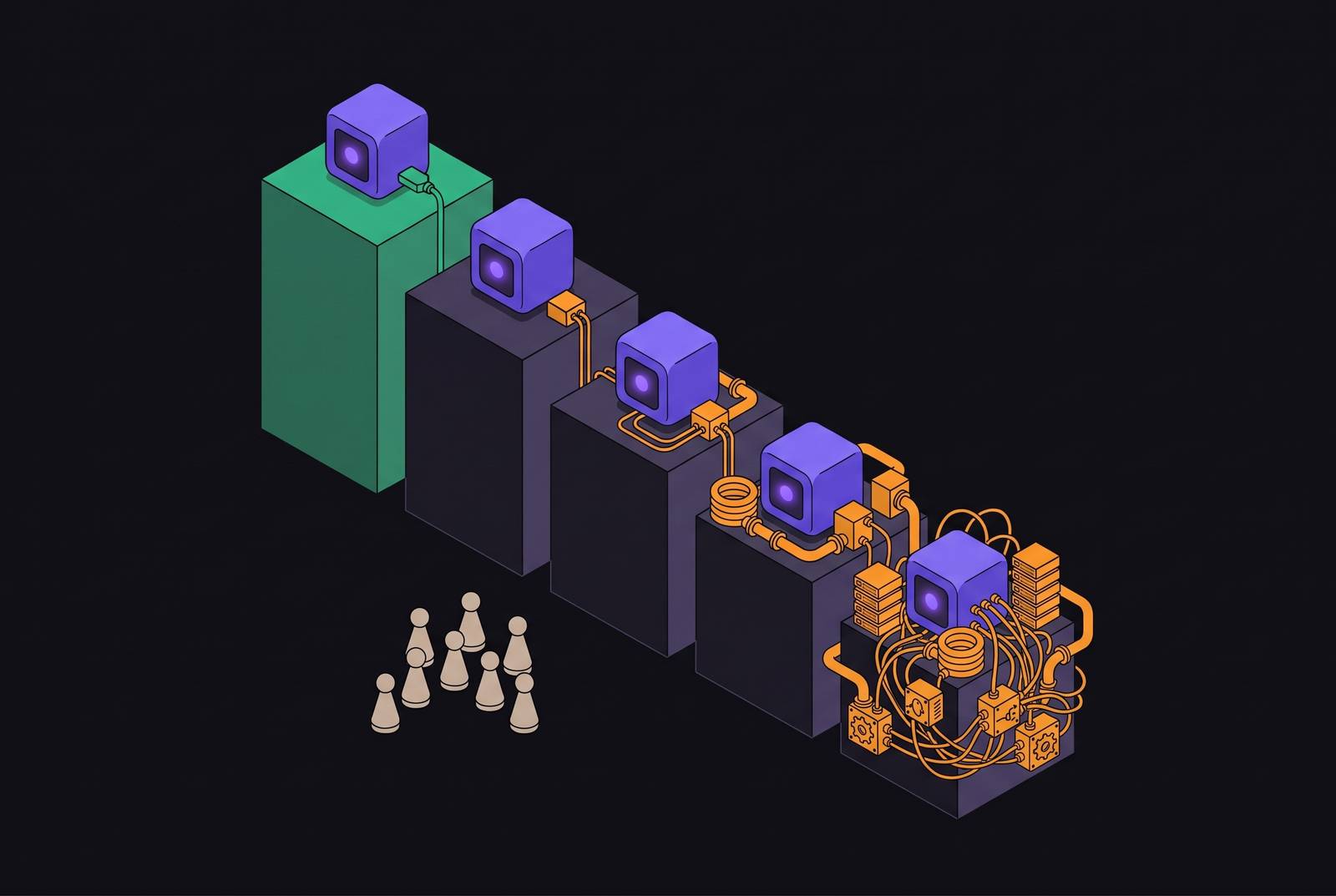
For teams with fewer than ten engineers, Claude Code, Goose, and OpenCode are the lowest-overhead starting points for independent coding tasks. OpenHands fits workflows needing prebuilt coordination, while LangGraph and Microsoft Agent Framework suit teams ready to own more infrastructure. This ranking puts engineering time ahead of model price, because the best small-team AI assistant is the one that demands no more coordination plumbing than the workflow needs.
Why orchestration overhead is the actual cost of AI assistants for small teams
Model pricing is visible before an assistant does any useful work. The engineering hours needed to connect its actions, handle failures, and understand its decisions are harder to price beforehand. That gap distorts the buying decision. A cheap model can be part of a costly workflow if engineers have to keep fixing the machinery around it.
The burden grows when agents delegate, retry failed steps, or choose tools dynamically. Each choice adds another path to coordinate and check, and inter-agent dependencies can be harder to manage than single model calls. A failed step may trigger a retry chain that costs far more than the normal path. Predictability disappears just when oversight becomes more demanding.
For a small team, this is also a staffing problem. There is no dedicated ML-ops function waiting to absorb the work. The same people building the product must explain why an agent chose a tool, why it repeated an action, and whether its output is safe to use. The useful comparison therefore weighs the coordination work each assistant leaves behind alongside the price of generating an answer.
What orchestration overhead actually means in practice, and why it scales badly with team size
Orchestration overhead has five concerns, namely isolation, communication, coordination, observability, and failure recovery. Isolation keeps work separate, while communication lets agents share what they need. Coordination determines who does what and when. Observability shows what the agents decide, and failure recovery keeps a failed step from turning into work someone has to rescue by hand.
Parallel execution on its own guarantees none of these things. Agents working at the same time can edit the same files, do the same task twice, build APIs that disagree, or spend tokens rereading context another agent has already processed. Without monitoring and recovery, an apparent speedup can instead become a larger queue of work for an engineer to untangle.
The ranking separates tools by how much of this stack remains the team’s responsibility. Tier 1 keeps coordination within the assistant and lightweight configuration, Tier 2 supplies prebuilt coordination with deployment work, and Tier 3 gives teams primitives for building their own system. Control increases with the ownership burden. Full-stack runtimes can absorb parts of that burden, but the decisive question remains what the team must maintain itself.
Before accepting that burden, though, does the workflow need orchestration at all? Many requests labeled multi-agent orchestration are deterministic chains in disguise. A linear workflow with one or two tool calls and no branching can use a vendor SDK more quickly and cheaply. A framework adds little value if the workflow never needs its machinery.
The five orchestration patterns every workflow maps to, ranked by setup burden
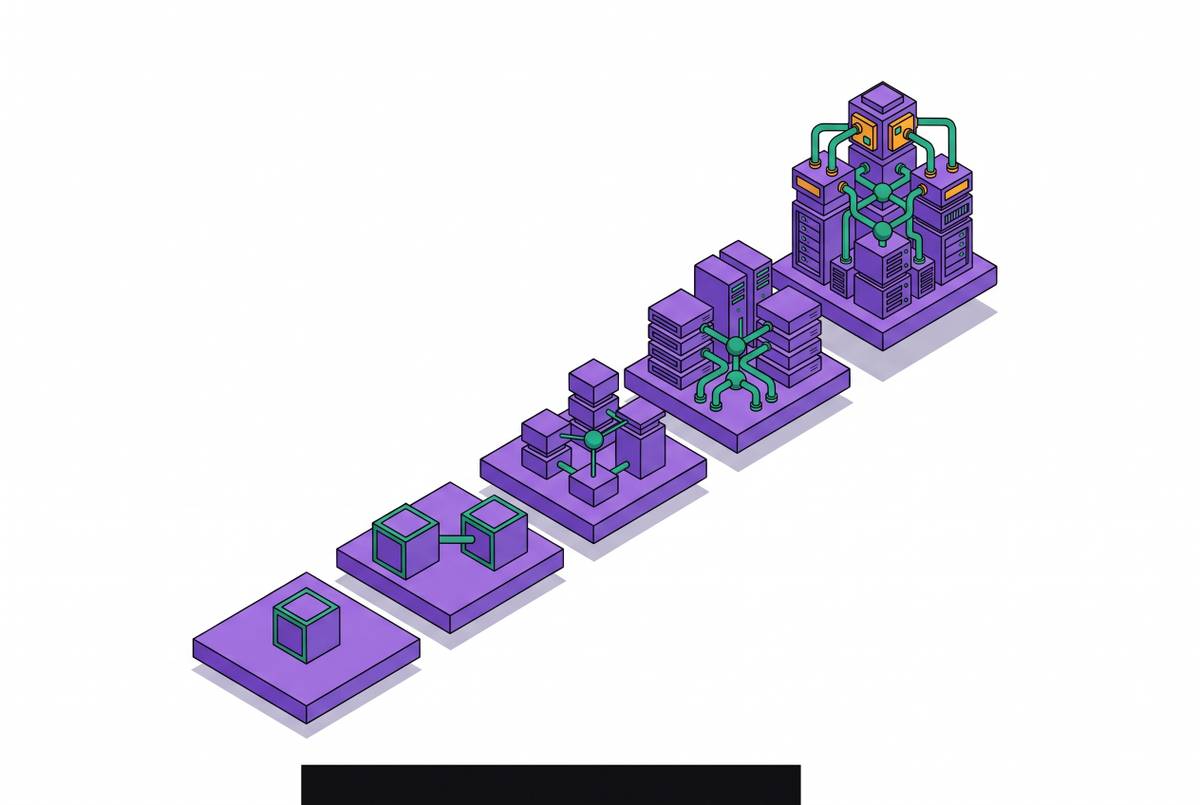
The solo agent pattern assigns one task to one agent with its full context window. It needs no coordination infrastructure and suits tasks touching a small number of files. Throughput and context length are its main limits. If that describes the work, additional agents solve a problem the workflow does not yet have.
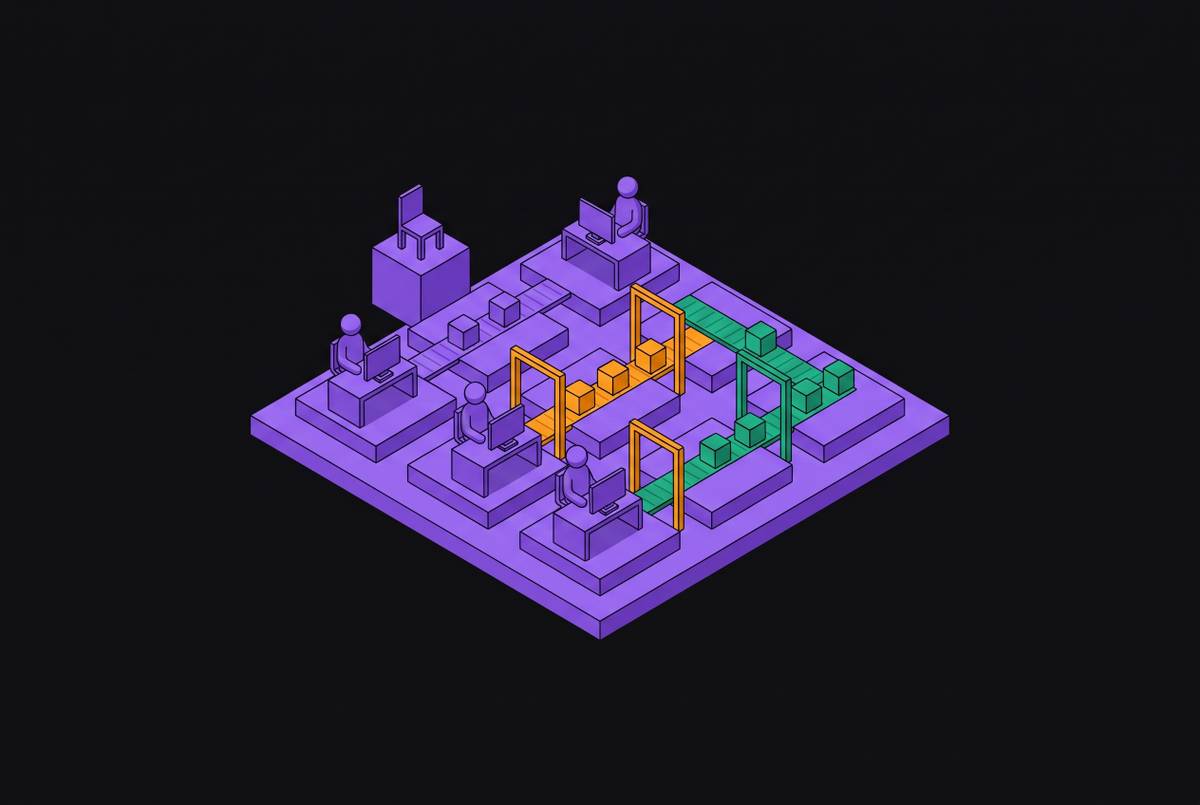
Parallel workers fit when the tasks do not depend on each other. Each agent has its own git worktree on a separate branch and works without inter-agent communication. Independence is the condition that keeps setup light. A human or automated dispatcher still has to divide the work into non-overlapping file sets, because overlapping edits bring merge conflicts back into the picture.
A pipeline fits when one stage needs another’s output. Agents run sequentially, potentially with different models or prompts, and each stage has a quality gate. Handoffs now become part of the engineering work. The setup burden is moderate because the team must define both the gates and what happens between stages.
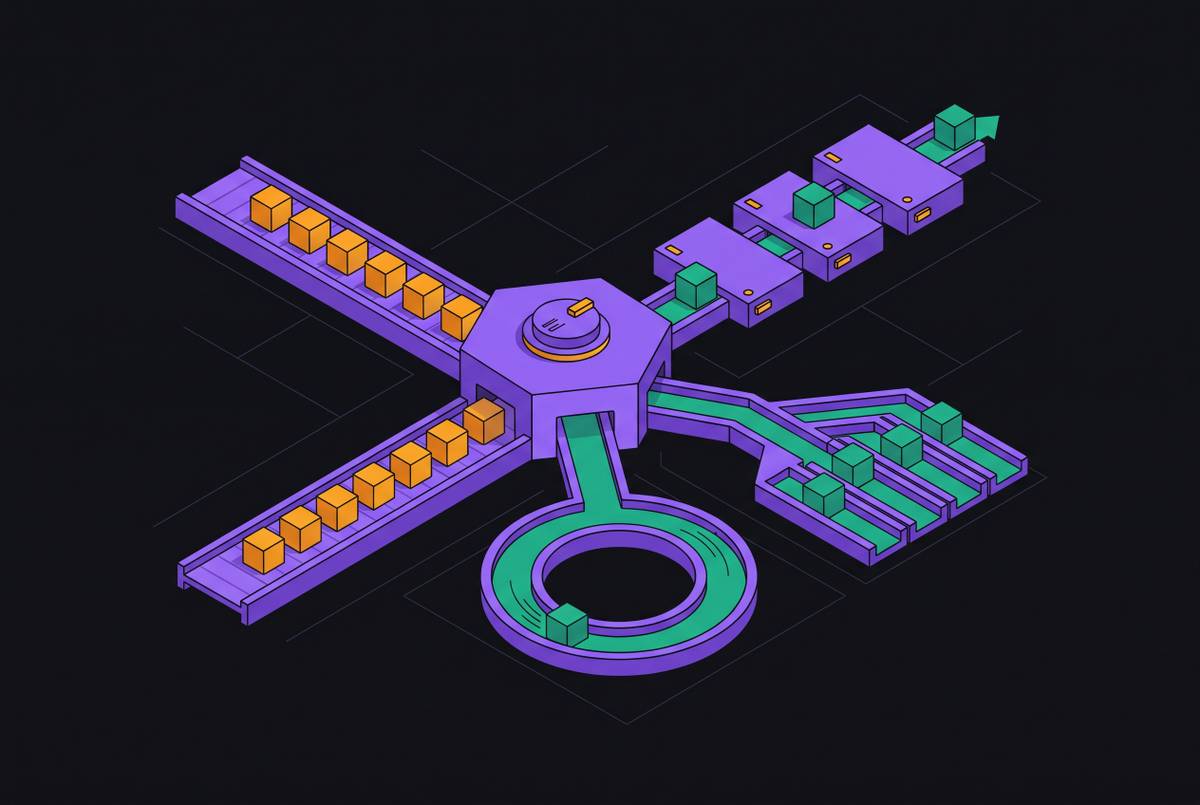
A supervisor pattern becomes useful when someone must decide what happens next. A central controller decomposes tasks, delegates to specialists, collects and validates their output, and chooses subsequent actions. Strict oversight comes with more substantial coordination infrastructure. Hierarchical multi-agent systems extend this arrangement into layers of planners, domain orchestrators, and sub-agents, with the highest setup burden.
That final pattern fits work such as supply chain management, multi-department approvals, and large-scale operations. Most small-team work instead fits solo agents or parallel workers. The Graph Engineering in the Era of LLM Agents survey distinguishes individual intelligence from system intelligence, arguing that interdependent work can require coordination beyond any single agent.
Tier 1 tools: assistants that impose near-zero coordination infrastructure
Claude Code is the strongest starting point here for context-contained coding work and a few independent workers. It handles work within the agent’s context window and can scale to two or three workers when tickets are independent. Its agent teams feature lets teammates talk directly to each other, each with their own context windows and access to a shared task list. That is a lightweight upgrade path.
Agent teams are disabled by default and enabled through a single environment variable in settings.json or the shell environment. Teammates can claim work and share what they find instead of sending everything back through regular subagents. The configuration change is small. Whether the workflow benefits still depends on how cleanly the work can be divided.
Anthropic’s code-review work shows how much a team can do with lightweight configuration. Its merge volume grew a great deal while the revert rate fell. The transferable pieces are a short CLAUDE.md, a REVIEW.md written by the code owner, a round cap, and a revert-rate dashboard. A risk classifier and voting among review agents become worth building only when review volume justifies them.
Goose is a good fit for teams seeking local execution and portable workflows. Its recipes capture instructions, extensions, parameters, and subrecipes in YAML configurations that teams can share or run in CI. OpenCode supports more than two hundred model providers, so teams can choose which providers to use without adding coordination overhead.
These are positive choices for solo and parallel-worker patterns. Their coordination surface is chiefly the context window and lightweight configuration, with persistent project files providing a practical knowledge layer. They are not substitutes for every kind of runtime. When work genuinely needs stateful retries, branching logic, or persistence beyond those files, the developer inherits the remaining complexity.
Tier 2 tools: self-hosted assistants with prebuilt coordination that reduce but do not eliminate setup work
OpenHands fits teams that need isolation, reproducibility, or event-triggered execution without building coordination from scratch. It runs the agent inside a Docker container, reducing risk when the agent executes commands. It handles whole software-engineering tasks such as vulnerability remediation, dependency upgrades, automated code review, and incident triage.
Event-trigger integrations remove some of the glue between the agent and the source of work. That changes what the team owns. Engineers configure the integration rather than write every connection themselves, making this tier a useful step up for parallel-worker and pipeline workflows that have outgrown a single context window. It is a closer fit when the workflow does not require dynamic branching or a supervisor agent.
The team owns the Docker deployment, integration configuration, and observability beyond what the tool exposes. Governance also remains an engineering responsibility with prebuilt handoffs. The next tier offers more control over those concerns, but its frameworks do not make the work vanish.
Tier 3 tools: framework-first platforms that maximize control and maximize setup commitment
LangGraph fits teams led by engineers who need to control routing, state, inter-agent communication, and failure recovery. Supervisor and hierarchical patterns can justify that commitment. LangGraph 1.2 deepened durable execution through per-node timeouts, error handlers, and graceful shutdown. These features reduce the burden of stateful retries in long-running loops, without removing the initial work of building the system.
How well Microsoft Agent Framework fits depends more on the stack a team uses. It reached general availability in April 2026, unifying AutoGen and Semantic Kernel into one SDK. For.NET or Azure-native teams, it is the lowest-overhead route within this tier. Outside that stack, its setup burden is comparable to or higher than LangGraph’s, so familiarity with the surrounding infrastructure changes the ranking.
CrewAI offers the fastest prototype among these framework-first options. However, it consumes meaningfully more tokens than LangGraph on simple workflows. Prototype speed and operating cost are different advantages. As usage grows, a quick start can lose its appeal if the workflow keeps paying for coordination it does not need.
The fair objection is that greater flexibility may be useful later. That flexibility has a maintenance cost today. Teams without prior LLM-in-production experience have a lot of engineering work to do before a framework helps the business, even if its abstractions are sound. For a genuinely complex workflow, that investment can be justified, but anticipated complexity alone is a weak reason to pay it early.
Memory and persistent state: the hidden orchestration tax that cuts across all three tiers
The MCP 2026-07-28 final specification makes modern requests stateless, removing protocol sessions, the Mcp-Session-Id header, and the initialization handshake. That is easy to misunderstand when tools are described as offering MCP memory. MCP is a transport. Durable memory exists only when something behind the server holds the shared, current picture, making persistence an application-layer responsibility.
For small teams, persistent context files are the lowest-overhead answer. CLAUDE.md, AGENTS.md, and.cursor/rules hold project knowledge in version-controlled files with no external dependencies. The files supply continuity without a memory service. They fit work where project instructions and durable knowledge can be maintained as part of the repository.
Managed options such as Mem0, Zep, and Letta offer mature retrieval with vector search and re-ranking built in. The trade is vendor dependency for ready-made retrieval. A decentralized MCP plus Conflict-free Replicated Data Types approach instead addresses concurrent writes and supports local-replica offline operation with lower vendor lock-in. The team has more control but must do the work of building retrieval itself.
This is not a problem a better prompt fully resolves. The same survey identifies persistent state as a system-level requirement that can exceed a single agent’s organizational capacity. Losing context means repeated questions and repeated onboarding, disrupting steady progress across sessions. Context files fit Tier 1, while workflows that run longer in Tier 2 and Tier 3 usually need a managed or custom memory layer.
What AI tools work best for a small team with a limited budget?
Matching the workflow pattern is the practical first step before comparing features. Tier 1 fits solo work and independent parallel tasks, Tier 2 is a likely fit for pipelines and event-triggered work, and Tier 3 is a likely fit for supervisor or hierarchical workflows. Engineering skill does not change that mapping. Even a highly skilled team gains little from owning an orchestration layer its simple tasks do not need.
For a team adding AI without a dedicated AI person, the starter stack is a Tier 1 assistant plus persistent project context files. Claude Code fits context-contained coding, Goose fits teams that want portable recipe-based workflows, and OpenCode fits teams that want a choice of providers. The first phase is solo-agent work. Independent tickets can then go to parallel workers without adding dependencies just to use a multi-agent feature.
The next phase is justified when the work needs prebuilt event triggers, isolation, or pipeline handoffs. OpenHands supplies that middle step. A further move to framework-first tooling requires genuine supervisor or hierarchical needs, an honest budget for setup, and attention to prior LLM-in-production experience. Within that tier, existing.NET or Azure affinity gives the Microsoft framework a clearer advantage.
Staffing makes those boundaries consequential for teams of three to eight engineers. Prompt and evaluation work, infrastructure and operations, and agent ownership plus product and security already compete for limited attention. Custom orchestration leaves little slack. Model routing can reduce costs by assigning frontier models to complex reasoning, mid-tier models to standard tasks, and small models to frequent execution, but it requires owned orchestration or a platform that exposes routing.
There is no need to buy every future capability upfront. The A2A protocol provides a documented path for agents in different frameworks to hand off work without a custom adapter. Purpose-built runtimes can also narrow the overhead gap by supplying scheduling, memory management, and durable execution as infrastructure. Those paths let a small team add coordination when its work demands it, rather than staffing the imagined needs of a larger organization.