Orchestrating AI Adoption Across a Small Team Without a Dedicated Owner
Three part-time owners can run agents safely without a hire.
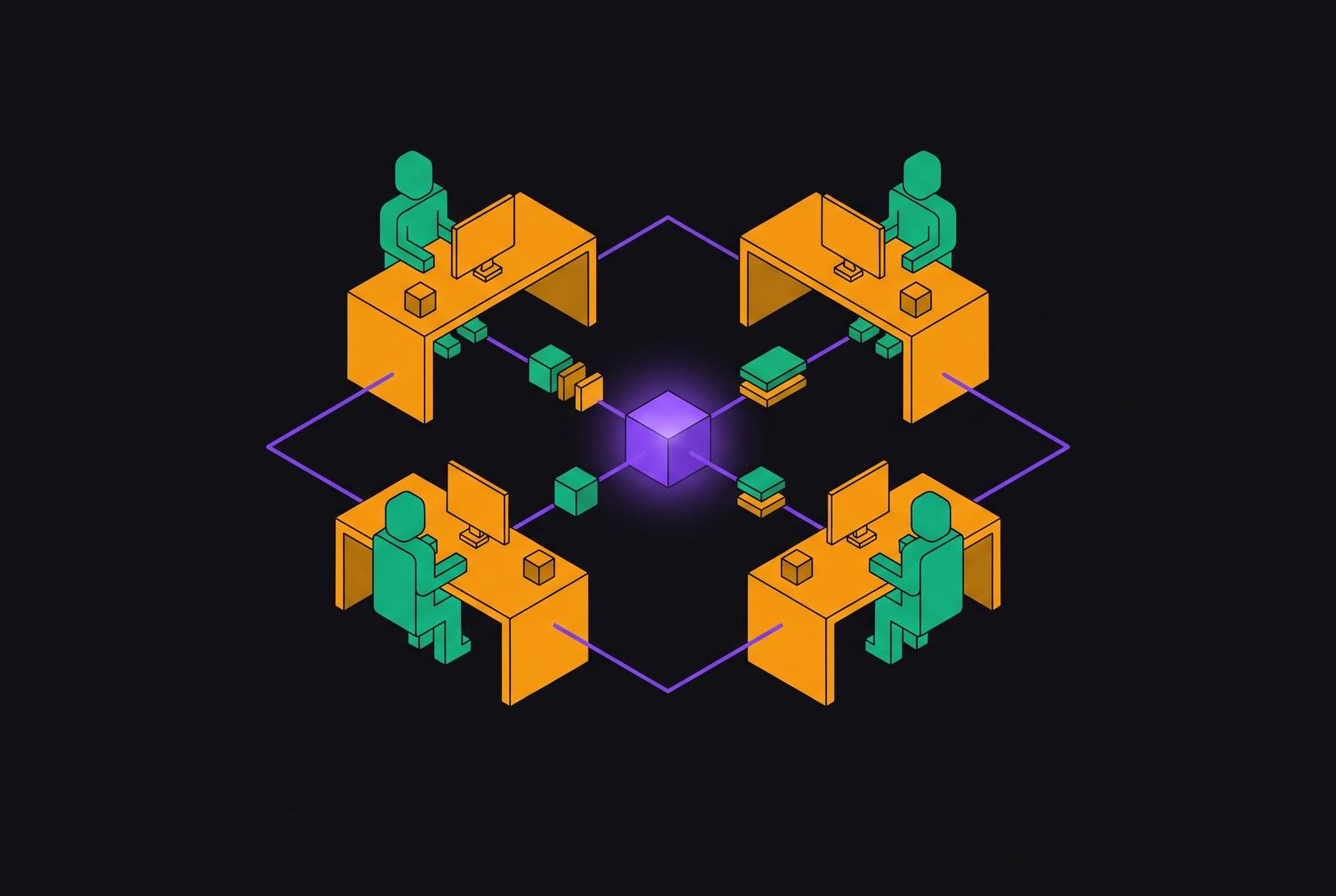
Small teams can adopt agentic AI without hiring a dedicated AI owner by dividing responsibility among a workflow steward, a runtime operator, and a policy reviewer. Start with one low-risk workflow, a lean stack of model, tools, and evaluations, and infrastructure that handles the operational burden. People retain judgment and accountability while the runtime handles execution controls.
Why small teams are the natural fit for agentic AI, and why they still stall
Small teams can move quickly enough to build agents, yet still struggle to put one into daily use. Their short approval chains favor experimentation, but production needs someone to answer for what the agent does. That is where the apparent advantage stalls. A team may have useful prompts and promising demonstrations without a clear owner for access rights, output quality, or failures.
Bandara et al. (2026) say three to four members are enough to design, build, and deploy production-ready agentic workflows. Large organizations, by contrast, face approval chains, legacy tooling, and rigid development models that impede exploratory work. Koch & Wellbrock (2026) identify labour shortages, administrative overload, and fragmented information systems as pressures making agents useful to smaller businesses. The need and the capacity are both there. What is missing is often a way to embed the model safely into work without waiting for someone to own AI full-time.
What a dedicated AI owner actually does — and which parts infrastructure can absorb
What would that dedicated person actually do? Koch & Wellbrock define an integrator role spanning process understanding, system interfaces, identity and access management, AI evaluation, governance, and workforce enablement. Choosing a workflow requires business judgment, while judging an output requires knowledge of the task. Both jobs can be done by someone who is not an AI specialist.
Audit logging, access scoping, context persistence, scheduling, and rollback need reliable mechanisms. Infrastructure can absorb much of this work. It cannot decide whether a workflow is worth automating, but it can enforce the boundaries people set and preserve the record they need to review its behavior.
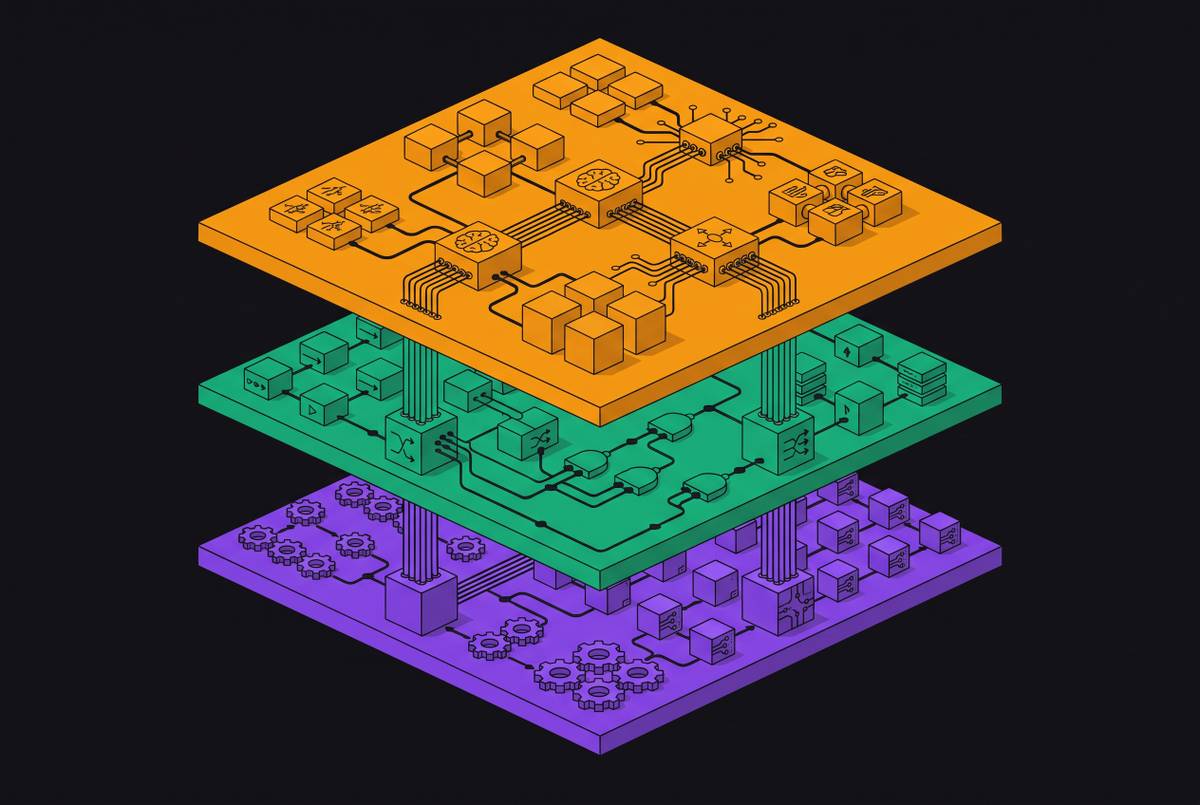
An Agent Operating System, or AOS, makes that division explicit. Its Control & Governance Plane handles intent, policy, trust, and human oversight, while its Runtime & Coordination Plane handles lifecycle, workflow coordination, context, memory, and scheduling. In plain terms, it is a policy-controlled execution environment in which agents can use tools and take bounded actions. Operators keep control of identity, isolation, audit, and rollback. Those controls should be built into the runtime so an already busy teammate does not have to handle them as chores.
The distributed ownership model: spreading accountability across the team without creating chaos
The simplest setup that works names three people to own the decisions that still need a human. Ownership follows existing work. Koch & Wellbrock’s Human Responsibility Core principle requires responsibility and accountability to stay with people. Sharing the work meets that requirement only when each person knows which part they own. “Everyone owns AI” leaves the difficult decisions unassigned.
The workflow steward is the person closest to the process. This person sets out what success looks like, flags drift, and decides when the agent should have more or less autonomy. The runtime operator owns configuration files, MCP server connections, access scopes, and monitoring setup. An engineer or engineer-adjacent teammate is a good fit for that role. With the operational infrastructure in place, it is a maintenance function.
The policy reviewer is in charge of judging risk at set times. A founder, ops lead, or person handling compliance can review what the agent did, what it was blocked from doing, and whether its permissions remain appropriate. A weekly output-quality check can belong to any teammate given a one-page rubric, while the policy reviewer conducts the monthly review. These roles need infrastructure beneath them. Without automatic audit, isolation, scheduling, and rollback, narrow decision-making responsibilities can turn into open-ended operational work.
Choosing the first workflow: what makes a process ready for a distributed-ownership agent
The first workflow needs to produce evidence quickly enough for those owners to learn. Koch & Wellbrock’s process-fit lens favors work that is frequent, semi-structured, digital, and verifiable. Work that happens often gives the team more chances to judge its quality. Verifiability gives the steward a sustainable check. A task that runs only a couple of times a month offers little signal during the first few weeks.
Three starting points fit those constraints and can be shipped in a week. Internal ticket or request triage can categorize incoming work, draft replies, or route requests to the right person. Meeting notes to action items produces a structured summary with owners and deadlines that the steward can verify in under two minutes. Drafting a weekly status report draws on connected tools, and a teammate then edits the result.
The rollout should begin with read-only tools and clear success measures. Koch & Wellbrock place realistic starting autonomy at levels 2 to 4, which involve partial autonomy with human checkpoints. Once the team has evidence, a second phase can introduce low-risk automatic actions, review for medium-risk actions, and blocks on high-risk actions. That phase should include incident runbooks and a monthly policy review with engineering and the other people who have a stake in the work.
What AI tools work best for a small team with a limited budget?
The recommended starter stack is a model, tools connected through MCP, and evaluations. An API gateway becomes useful when a second application or provider appears, while a separate observability layer becomes useful when a second agent runs. Basic logs and monitoring are still needed from the beginning. The distinction is between essential controls and added tooling for complexity the team does not yet have.
Orchestration should follow the shape of the work. Smolagents or the OpenAI Agents SDK fit linear, single-agent tasks. LangGraph fits multi-step work that needs state, while a role-based orchestration framework fits role-based multi-agent work. For a small team with limited budget, the defensible comparison is how much coordination the workflow needs and how much maintenance each added component creates.
MCP reduces the need to build custom integrations. Registries such as Smithery and mcp.run offer thousands of servers, and major development tools support the standard. Connections still need careful ownership, however. An MCP configuration decides which servers an agent trusts, while a SessionStart hook runs when a developer opens a project. The runtime operator should treat these files as privileged infrastructure, with change tracking, review, and monitoring, and give agents explicit identities with least-privilege access.
The team should choose how to handle memory separately from choosing a model. Context management determines what enters the context window for one inference, while memory management stores and retrieves knowledge across sessions. Confusing them can produce inconsistent behavior that is hard to debug. Mem0 offers an infrastructure-layer approach that centralizes persistent memory outside the agent. Persistence and scheduling are needed when the workflow has to remember past work and act without another prompt.
Where agents surface for the team: keeping the interface where people already work
A maintainable backend is not enough if the steward rarely encounters the agent. The interface should fit how the team already works. The same agent can appear as an embeddable widget, hosted portal, Slack or WhatsApp bot, or API endpoint without being rebuilt for each surface. Familiar tools make it easier to use and evaluate the agent regularly.
Incident.io gives operations teams a Slack-native way to work. Teams can declare, coordinate, and close incidents through /inc commands, with a separate web dashboard for analytics, configuration, and incident declaration. A custom agent running from the command line with a structured prompt keeps interaction inside the workflow engineers already use. Both patterns put the agent where the work happens.
For nontechnical teammates, a personal work agent is a useful on-ramp. Preparing a client briefing, summarizing a sales call, or turning messy notes into a proposal outline requires context that the person already understands. That makes the output easier to assess. The purpose is not merely to offer a simpler interface, but to build an informed sense of what the agent can and cannot do. That intuition prepares the teammate to act as a steward when the agent later receives broader permissions.
Tiered autonomy: how to expand what the agent can do without losing the team's trust in it
When should an agent be allowed to do more? Expanded autonomy depends on observed behavior within a defined risk boundary. Low-risk actions can run automatically, medium-risk actions should come to the team for approval, and high-risk actions stay blocked until policy changes. A new workflow should start in review mode. The team needs to see proposed actions before deciding which ones it can safely stop approving.
Azure SRE Agent provides a concrete illustration of this distinction. Its Autonomous mode carries out mitigation on its own, while Review mode diagnoses and proposes but waits for approval before carrying out Azure infrastructure write actions. A helpful diagnosis alone is not enough to give an agent permission to change a system. The policy reviewer can use this same distinction without needing deep expertise in the model.
The monthly policy review makes sure the team keeps checking permissions after setup. A one-hour meeting with a one-page log is sufficient to examine what the agent did, what was blocked, and whether its autonomy settings still fit the work. Koch & Wellbrock treat governance owners, logs, access rights, monitoring, and kill switches as mandatory. Infrastructure should supply the operational records and controls. People must still be named to interpret those records and make the decisions.
Evaluation gives that review more to go on than what each person thinks. A small set of prompt unit tests, run against outputs on a fixed schedule, can catch drift before the steward notices it manually. It need not be a research-grade evaluation suite. The steward defines what good looks like, the runtime operator sets up the test runner, and the policy reviewer examines results monthly. This division makes the team responsible for repeatable evaluation it can carry out independently of an AI specialist.
What the team looks like six months in: the signals that show the model is working
Six months in, success looks more ordinary than a collection of impressive demos. The team has one agent doing real work, a named steward, a measured intervention rate, and a clear next workflow queued. The Agent Production Ratio measures the share of agent workflows handling real work. One working agent is a stronger result than five unmonitored ones. The count alone says little about whether the team can depend on them.
The intervention rate can show sooner how well the agent is doing. If the steward intervenes less often while output quality holds, the agent is earning broader autonomy. A flat or rising rate suggests that configuration or workflow selection needs to change. Less human involvement is useful only when the work remains good enough to meet the steward’s definition of success.
A second agent then tests whether the ownership model transfers. The team can keep the roles, monthly review, and tiered permissions without doing twice as much governance work, while added observability helps it see how agents behave together. As work gets more complex, it may eventually need a manager-plus-specialist setup with narrow handoffs and asynchronous execution.
The durable foundation is infrastructure built for agent execution. Identity, isolation, audit, rollback, scheduling, and context persistence belong in the runtime. Human attention can then stay on exceptions and judgment. The team has a way to take on the next workflow without first waiting for a new hire.