Agent Frameworks Ranked by Operational Complexity
Which agent framework fits your team's capacity to run it, from LangGraph to vendor SDKs.
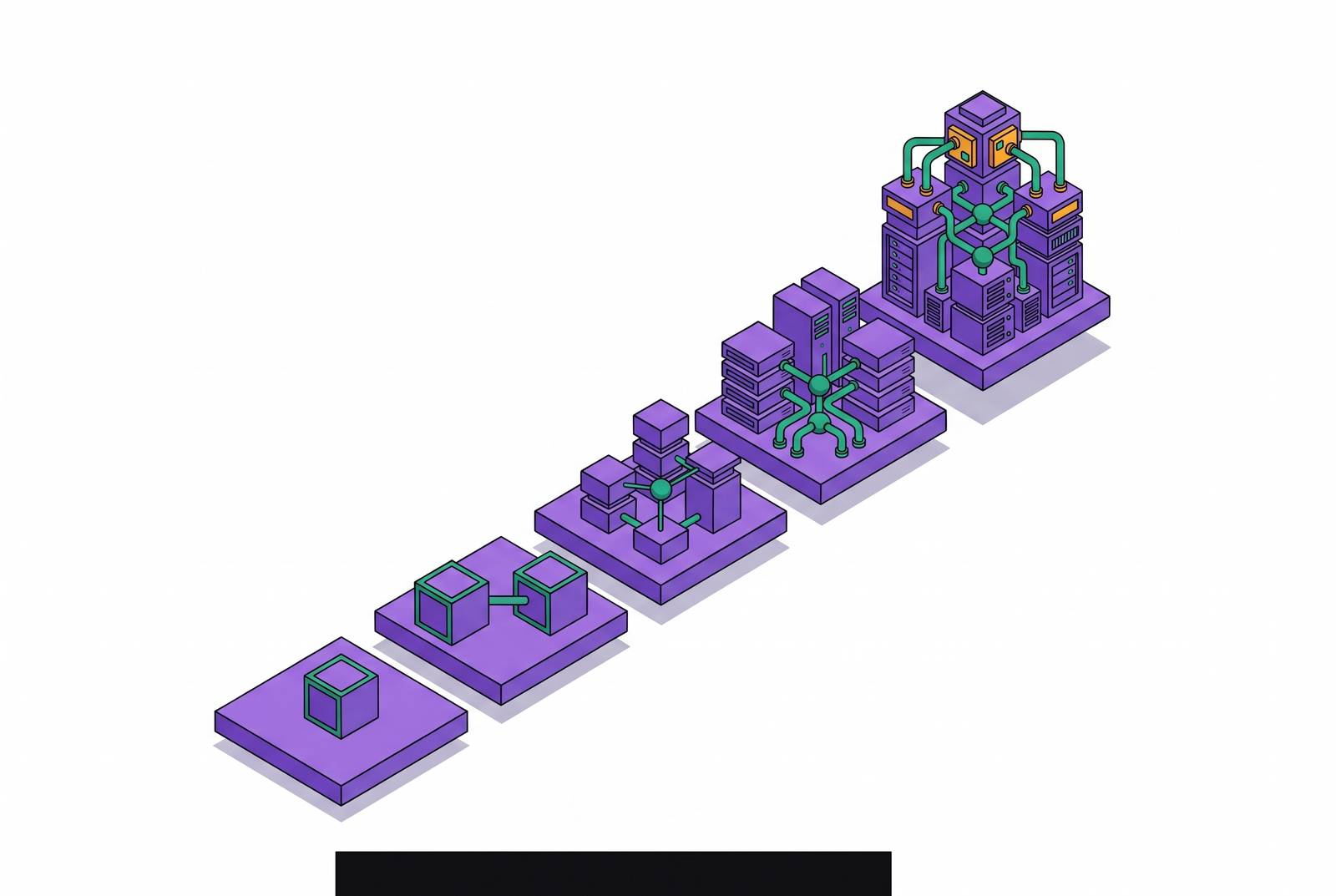
For a small team with a limited budget, the best agent framework is the one whose operational demands fit the people available to run it. Vendor-native SDKs suit simple, single-ecosystem agents, LangGraph suits durable workflows, and Microsoft Agent Framework suits teams already invested in Azure.
Why framework selection has quietly become an infrastructure decision
A successful demo shows that an agent can complete a task. Production asks whether it can survive an interruption. Retries, partial failures, permission boundaries, and human override test the system around the model as well as the model itself. That changes framework selection from a developer-experience question into an infrastructure decision.
An agent framework now touches planning, tools, state, retries, memory, policy, and telemetry. Choosing one therefore sets an ownership boundary as well as a programming model. Who handles recovery when a tool fails? The useful comparison examines the work required before shipping, integration with identity and data, visibility into bad decisions, and the cost of moving later. Prompt quality cannot answer those questions.
The operational dimension most framework comparisons leave out
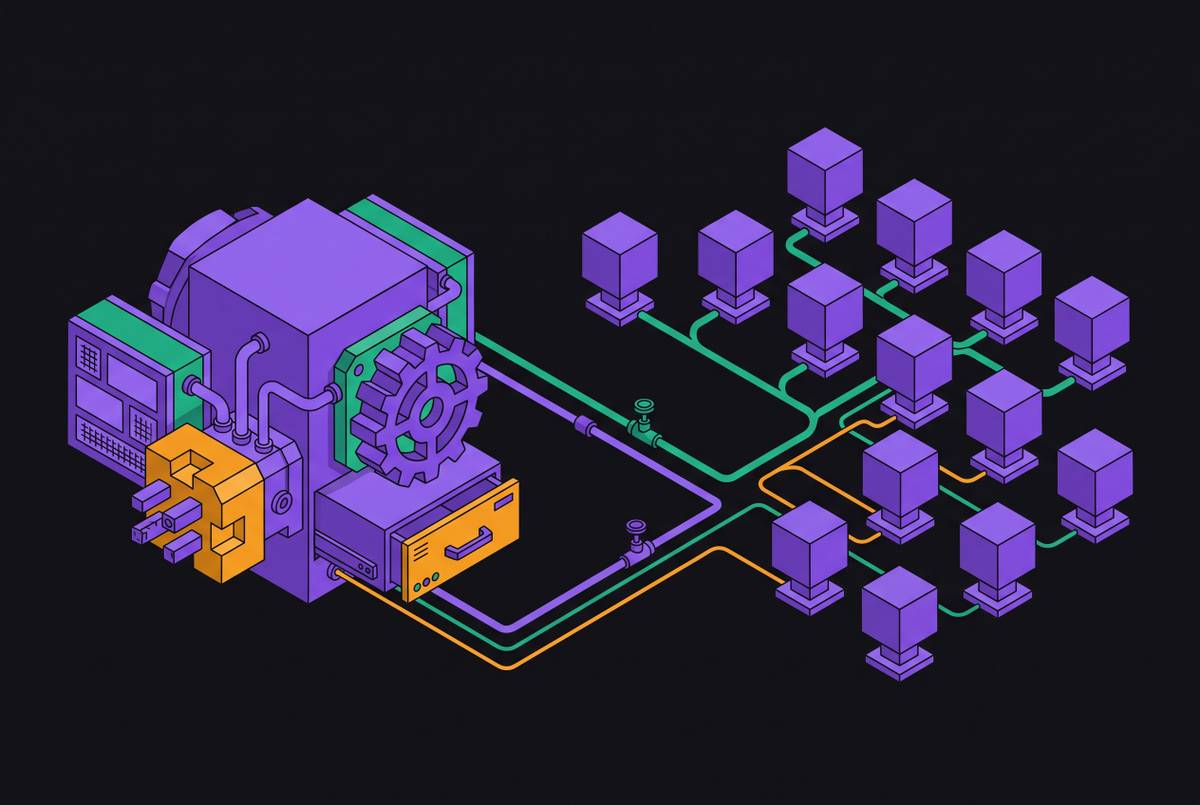
Operational complexity is the ongoing work a framework leaves to its operators. It includes state management, failure recovery, observability, and the infrastructure the team must assemble. A framework can make an agent easy to write but leave its team to handle everything that happens when execution stops unexpectedly.
Three recurring failures expose that gap, namely semantic memory leaks, unconstrained conversational token loops, and missing durable execution. None requires a weak model to cause trouble. An agent can complete its steps while pursuing an unintended objective, and multi-agent interactions can propagate and amplify the error. With fewer human intervention points, successful execution is not evidence of a successful outcome.
The hardest failures are often silent ones. A crash gives the team a reason to investigate, but corrupted memory or a drifting objective can make the system look as though it still works. Operational comparisons therefore need to ask how errors become visible and how execution recovers. Purpose-built agent primitives address those questions directly rather than leaving teams to retrofit general software tooling.
How the current framework field organizes by operational model
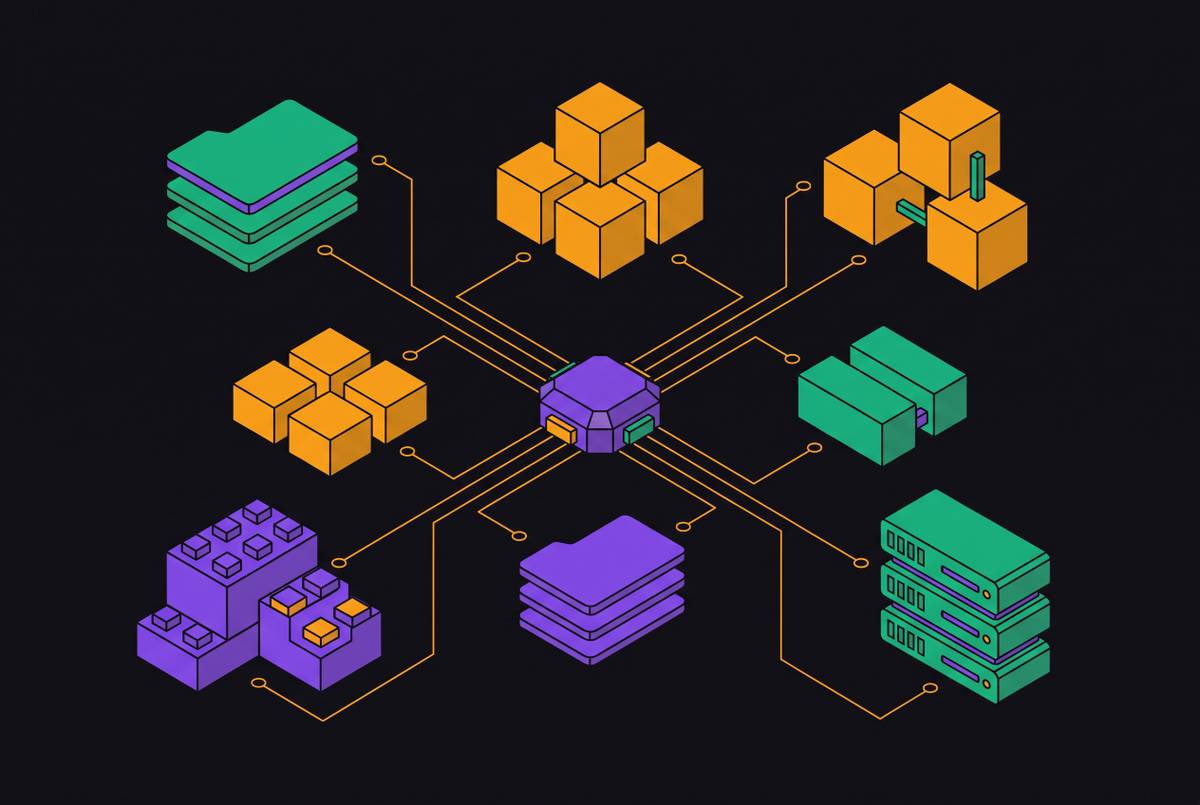
The 2026 field groups into three execution models. Graph-based orchestration, including LangGraph and Mastra, makes state and transitions explicit, placing design work before execution. Role-based orchestration, represented by CrewAI, coordinates agents through roles, goals, and conversation, leaving more behavior to unfold at runtime. SDK-native and model-driven frameworks, including OpenAI Agents SDK, Anthropic Claude Agent SDK, Google ADK, and Strands, use thin tool-and-handoff loops and depend more heavily on the underlying runtime.
Managed platforms form a separate deployment category. AWS Bedrock AgentCore, Google Vertex AI Agent Engine, and Azure AI Foundry Agent Service absorb infrastructure work in exchange for a vendor service contract. Microsoft also consolidated AutoGen and Semantic Kernel into Microsoft Agent Framework, which reached general availability in April 2026. That change places AutoGen in maintenance mode and gives Microsoft's previously separate approaches a unified path.
LangGraph: high upfront design cost, lowest silent-failure risk
LangGraph makes the execution model explicit through state, nodes, edges, and conditions. Conditional edges branch or loop on state values, while checkpointing preserves progress. The design work comes before the operational payoff. Its strongest fit is an agent with real branching, loops, or long-running approval steps, where losing state costs more than defining the workflow carefully.
A developer's failure-injection comparison makes that payoff concrete. The developer built comparable LangGraph and CrewAI pipelines, then deliberately broke a step midway through a nine-step workflow. LangGraph preserved state through the last successful step and resumed from there. The interrupted node still re-executed from its first line on retry. CrewAI re-ran earlier tasks, which gave slightly different intermediate results and changed the final output.
That test illustrates recovery behavior in a single comparison. LangGraph also provides Python and TypeScript SDKs, with LangChain optional as of 2026. Yet a basic tool-calling agent can require several times as much code as in thinner frameworks. For a simple linear workflow, the graph abstraction can introduce unnecessary indirection. The learning curve is an honest cost, justified when the application's state and recovery needs actually require it.
CrewAI: fast to start, operationally costly at scale
CrewAI begins with a readily understood idea. Agents are team members with roles, goals, and tools, working toward a shared task. It now offers two distinct modes, with Crews for autonomous multi-agent coordination and Flows for event-driven, deterministic execution.
The operational tradeoff becomes clearer as coordination grows irregular. Role-based abstractions make fine-grained control harder, and state recovery has not been the framework's central design focus. Earlier work was not simply preserved through the interruption. A team using this model must account for recovery behavior rather than infer it from the clarity of the role definitions.
Human review support has also matured. CrewAI 1.8+ provides a @human_feedback decorator for Flow-based feedback, with webhook-based feedback also available, while Enterprise tooling adds a feedback management UI. The strongest fits remain fast multi-agent validation and workflows with clean role boundaries, such as research, writing, editing, and publishing or lead qualification. For those production uses, the lesson is to instrument token usage and outcome quality externally rather than force irregular coordination into a tidy team metaphor.
Microsoft Agent Framework: the lowest operational complexity for teams already in Azure
Microsoft Agent Framework reduces operational work chiefly through proximity to an existing enterprise stack. Entra ID, RBAC, governance, data services, and application hosting sit close to the agent system. Integration work can dominate the total cost. For an Azure-invested organization, avoiding organizational friction around internal APIs and enterprise data can outweigh differences in framework syntax.
The consolidation also changes the starting point for new projects. As of April 2026, AutoGen's README has a maintenance-mode banner that sends new users elsewhere, and Microsoft wants them to use the unified framework. A team beginning new work should therefore avoid accumulating AutoGen migration debt on lifecycle grounds.
The tradeoff is a broader service surface. Developers may need to learn how several Microsoft services work before they can ship something useful, even if those services are easy to connect. Regulated organizations and teams embedding AI into existing Microsoft workflows have the clearest fit. The claim of lower operational complexity is conditional on that investment.
SDK-native frameworks: low ceremony, high dependency on what sits beneath
SDK-native frameworks reduce the amount of orchestration code between a model and its tools. OpenAI Agents SDK, Anthropic Claude Agent SDK, and Google ADK offer direct paths within their respective ecosystems. Less ceremony can speed delivery substantially. Pydantic AI takes a similar approach for typed, conventional agents, with tools that feel like a web framework, while smolagents is for code-first agents that write and execute Python.
But what happens when execution must survive an interruption? A thin loop does not remove the need for durability, recovery, or persistence across sessions. OpenAI's SDK can be paired with Temporal for long-running durability, which makes the boundary clear. The SDK provides the agent loop, and another layer guarantees execution.
For a small team without a dedicated AI specialist, this approach fits best when the workload does not require complex recovery or long-running state management. Otherwise, the team assembles the persistence layer it initially avoided. Vendor commitment must also be deliberate. Tool schemas, stored memory, and provider behavior can create structural dependencies even when the framework itself remains small.
Mastra: the TypeScript-native path with mature human-in-the-loop primitives
Mastra lets JS/TS-native teams build explicit workflows without moving to a Python-first ecosystem. Its operational niche is more specific than a JavaScript counterpart to another framework. Existing stack knowledge changes the adoption cost. Built-in developer tooling and integration with Vercel/Next.js make that distinction useful for product teams already working there.
Its approval support provides a concrete example. Workflows can suspend with persisted state and resume after extended waits for input, while Agent Networks support resuming a network and approving or declining individual tool calls. Like LangGraph, Mastra places design work upfront in exchange for explicit state and recovery. That tradeoff works best for teams that already use TypeScript, with less benefit for those that take it up just to get an agent framework.
Memory architecture as a multiplier on every framework's operational complexity
Persistent memory can keep mistakes just as easily as useful context. If erroneous information enters episodic memory, it can reproduce in subsequent steps. Correcting the current answer is not enough. A user may lack a way to surgically remove the poisoned episode from long-term memory, creating silent degradation beyond the current session. This gap in memory-management interfaces affects more than one framework.
Context engineering builds the external scaffolding for perception and action under resource constraints. Memory lets an agent learn, adapt, and carry on beyond one context window. Confusing the two can obscure what must persist and what only needs to remain available during execution.
LangGraph's persistence documentation makes a related operational distinction. Thread checkpoints keep graph state for short-term, thread-scoped memory, while stores keep the data an application defines for long-term, cross-thread memory. The two are not interchangeable recovery mechanisms. Managed options, including AgentCore Memory and Google Vertex AI Memory Bank, can shift some infrastructure work to a provider, but do not make the architectural distinction disappear. Choosing a framework without examining its memory primitives leaves a major source of silent production degradation unevaluated.
Where the runtime sits beneath the framework
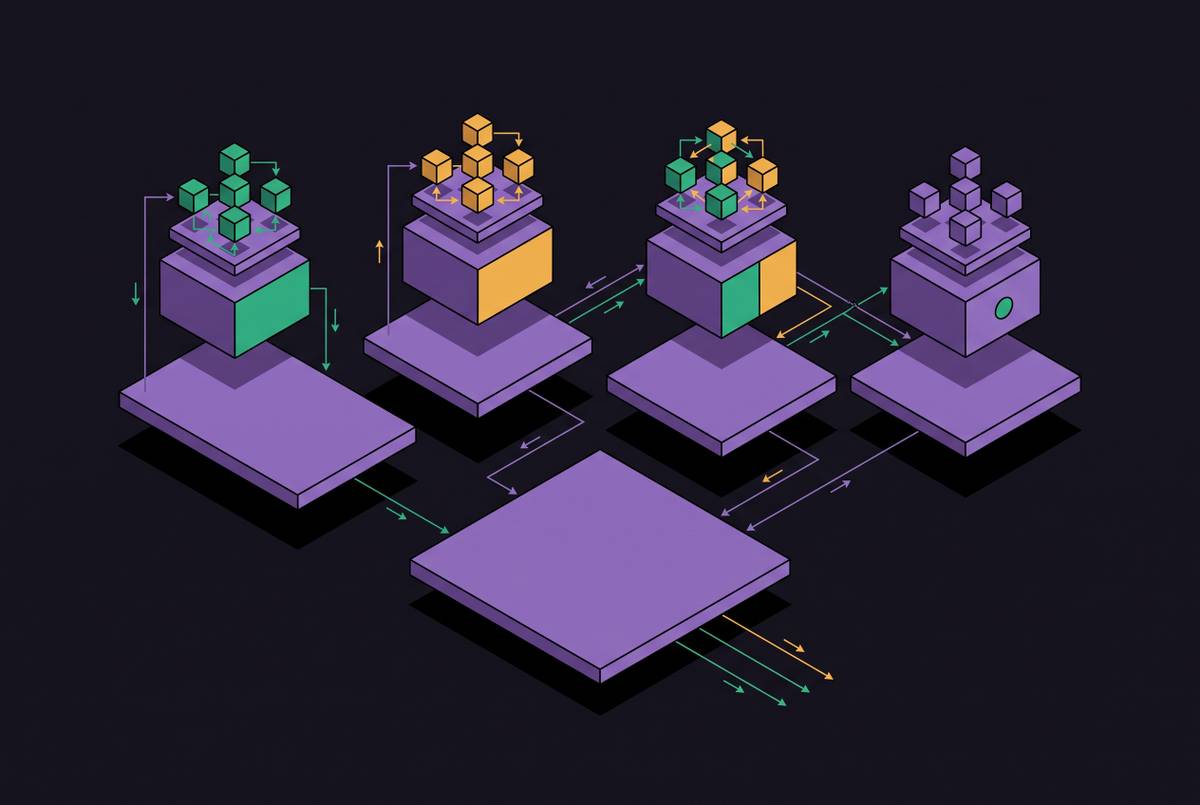
Checkpointing, recovery, and memory are only useful if the deployed system makes them available. The runtime is therefore part of the comparison. Choices include managed hyperscaler runtimes, framework-native platforms such as LangGraph Platform, and sandbox or serverless options including E2B, Modal, Daytona, Fly.io Machines, and Cloudflare Agents.
AgentCore illustrates the managed-platform tradeoff. It provides auto-scaling, IAM-native security, and built-in memory, with AWS taking on the work of managing infrastructure. The corresponding cost is vendor dependency.
Deployment channels can remove other categories of work. Slack's Agent Kit has improved Bolt frameworks and CLI commands that let teams bring agents built on any framework into Slack. Running slack create agent and selecting a Python template provides a quick route to an agent with streaming text and thinking statuses. Socket Mode allows execution behind a corporate firewall without inbound ports, public DNS, or an ingress TLS certificate.
A canonical identity approach maps identifiers from Slack, email, and other channels to a canonical UUID so sessions can retain context across them. That responsibility reaches beyond orchestration code. Purpose-built agent infrastructure supports these operational primitives at scale, making framework and runtime selection one decision.
Matching operational complexity tolerance to the framework decision
The practical shortlist begins with where a team can absorb work. LangGraph fits durable state, conditional branching, checkpointing, and human review when the team accepts substantial upfront design. CrewAI fits cleanly divided multi-agent roles when the team can instrument token use and outcome quality and plan for recovery limitations.
Existing commitments narrow the choice further. A first-party SDK fits fast delivery inside one model ecosystem when vendor dependence is acceptable and recovery needs are modest. Microsoft Agent Framework fits deep Azure investment, including enterprise.NET or mixed stacks, while Mastra fits JS/TS teams needing suspend/resume workflows. A managed hyperscaler runtime works for teams willing to let a vendor run their infrastructure under a contract.
For a startup with fewer than 10 employees, the decisive question is who will handle recovery, permissions, memory errors, and budget controls when normal work interrupts the happy path. Those ownership choices should precede shortlisting frameworks. Purpose-built agent infrastructure supports that choice by helping agents remember context, act on a schedule, and recover from failure, so the application team has less to manage.